

Have you ever tasted a wine from a classic region and thought, “Now that’s textbook”? So goes the story of TEXTBOOK founders Jonathan and Susan Pey—the latter of whom, after tasting their inaugural 2004 vintage of Oakville Cabernet Sauvignon, exclaimed, “This is textbook Oakville Cab!” The deeply concentrated varietal wine spoke to the power and richness typical of the New World while showing the terroir-driven nuances common in the Old World, particularly France and Italy, where the couple developed their appreciation for wine. Their goal from that day forward was to continually craft a celebratory homage to that initial experience and share it with an expanding audience of wine lovers.
They’ve succeeded. In the past two decades, TEXTBOOK has become a staple in wine shops, restaurants, and home cellars alike. Its wines are treasured for their stylistic consistency, offering savory sips of Napa Valley at an affordable price point.
Winemaker Abigail Estrada, who joined the TEXTBOOK team in 2022, brings a fresh international outlook to the two-decade-old business. After earning her BS in viticulture and enology from the University of California, Davis, she traveled to Italy, Israel, and New Zealand before setting down roots in Napa, where she further honed her skills at such reputed producers as Robert Mondavi and Chandon.
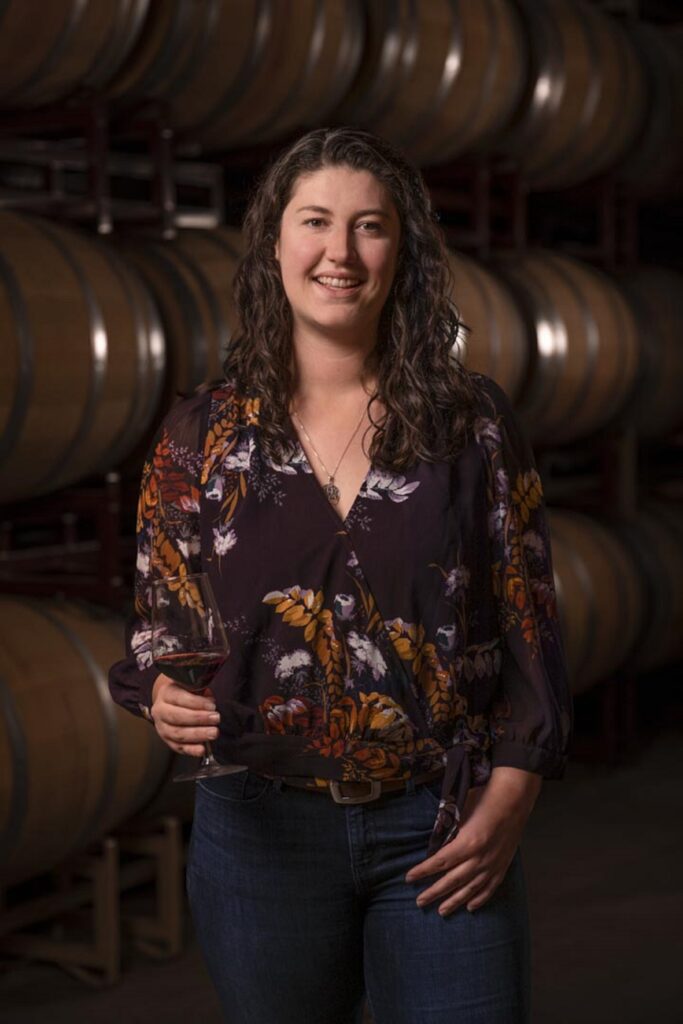
Since taking the reins at TEXTBOOK, Estrada has expanded the portfolio to include expressions from regions across California, including Sonoma’s Russian River Valley and the Central Coast’s Paso Robles. But she has also enhanced TEXTBOOK’s Napa Valley collection to include single-appellation Cabernet Sauvignon and Cab-based blends from Yountville and Oakville and comments that she’d love to add more sub-AVA–focused bottlings in the future.
“Jonathan really laid the foundation for our style,” says Estrada, who prides herself on being able to continue his legacy and craft the reliably high-value products TEXTBOOK is known for. But she also enjoys the encouragement the founder gives her when it comes to introducing a modern perspective—from her vigneron-like approach of working in sync with viticulturist Taylor Abudi to her implementation of state-of-the-art technology in the cellar. “If you’re not innovating, you’re falling behind,” she points out.
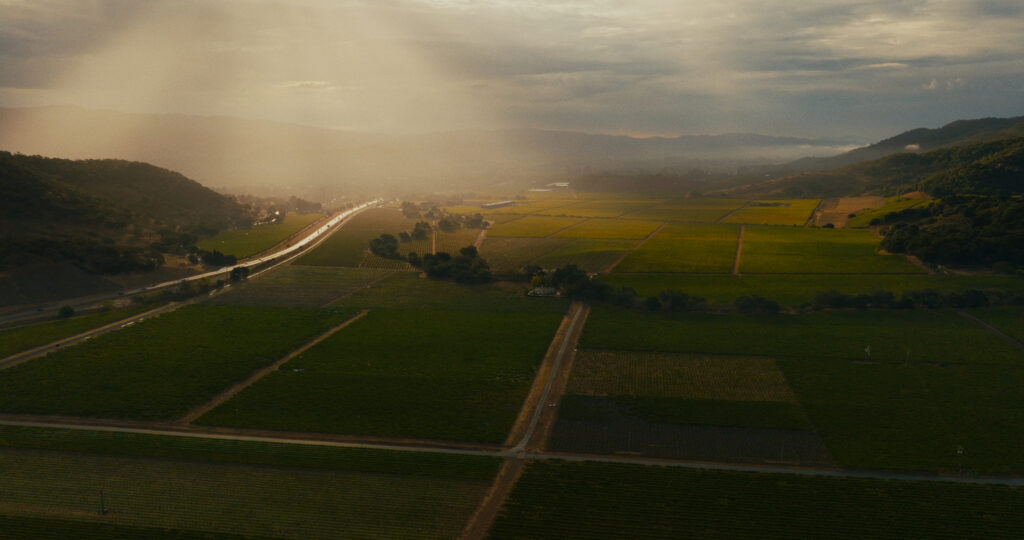
Quality can certainly be attributed to the more conscientious farming methods being rolled out in the estate vineyards. “We’ve always been in pursuit of sustainable practices—not just to say that we are but because we believe that it’s better for the land, better for the wine,” says Abudi, adding that she’s already seen savings in both farming costs and water use since the vineyards were certified by the California Sustainable Wine Association. “It was a big boat to turn around, because these vines had been farmed conventionally for a few decades.”
“The farming has improved immensely,” agrees Estrada, noting that animal integration, the utilization of cover crops, and reduced tilling have all played a significant role in the advancement of grape and wine quality. The health and vitality of the vines, the two women say, ensure that they’re able to harvest earlier than many of their neighbors while still achieving a balance between fully formed structure and flavor. “I’m not looking for that overly ripe, prune-y profile,” says Estrada. “I want to be more modest with the alcohol. And all of that helps with the immediate approachability of the wine.”
In the cellar, Estrada has fine-tuned her tannin management by introducing tanks that accommodate remote-controlled automatic pumpovers. “I can check on ferments from home,” she says, noting that the technology saves both time and space. It also allows her to dial in the needs of each specific batch, regulating cap management by time and temperature and adjusting the system immediately as needs arise.
Barrel trials are also among Estrada’s favorite experiments. “I inherited a few coopers that I absolutely love but also introduced a few new ones . . . that give some vanilla character to really balance these full-bodied reds and add an extra flavor our consumers really seem to love,” she says.
TEXTBOOK’s Napa Valley collection is indeed designed for people to sip and share immediately or cellar for future enjoyment. “These wines can age,” says Estrada. “They have the tannin structure and the acid. But the pillar of TEXTBOOK is to enjoy luxury today. They’re wines you can pick up and open tonight.”
And Estrada is not shy about enjoying her own wines on her own time. A self-proclaimed foodie and home chef who’s particularly adept at grilling, she says, “I do a lot of carnivorous pairings.” She suggests a juicy steak to accompany the soft, silky Yountville Ranch Cabernet Sauvignon; rich, gamy lamb for the generously acid-driven Page-Turner blend; and melt-in-your-mouth ribs alongside the Mise-en-Place Oakville Cabernet, with its firm tannic texture.
“I do hope that having single-appellation wines at an affordable price point will help break down that wall, that barrier to entry that new consumers seem to have today,” says Estrada. “And for our mature drinkers who are already familiar with the quality of wines these AVAs produce—this is for them too.”
Tasting Notes
TEXTBOOK 2022 Cabernet Sauvignon, Yountville Ranch Vineyard, Yountville, Napa Valley ($80) TEXTBOOK’S inaugural single-vineyard Cab aged 27 months in (70% new) French oak. Yountville Ranch’s well-drained, gravelly loam soils allow the roots to dive deep, as exhibited by the wine’s structured tannins. Luscious notes of crushed Morello cherry, red beet, and dark chocolate saturate the palate. The silky, creamy mouthfeel is almost hedonistic, yet it’s reined in by a spark of black pepper, anise, and cedar. In terms of aging potential, this wine is destined for greatness. 97 —Meridith May
TEXTBOOK 2022 Page-Turner Proprietary Red Blend, Oakville, Napa Valley ($80) This blend of 58% Merlot and 42% Cabernet Sauvignon aged almost two years in French oak. Melt-in-your-mouth chocolate and silky tannins are the protagonists of the palatable page turner, joined by white-peppered plum and ripe, dark cherry as they unite in a thrilling romp with grilled meats and lavender. Spoiler alert as we give the ending away: Earthy tones emerge with minerality while Italian herbs dust the tongue. 95 —M.M.
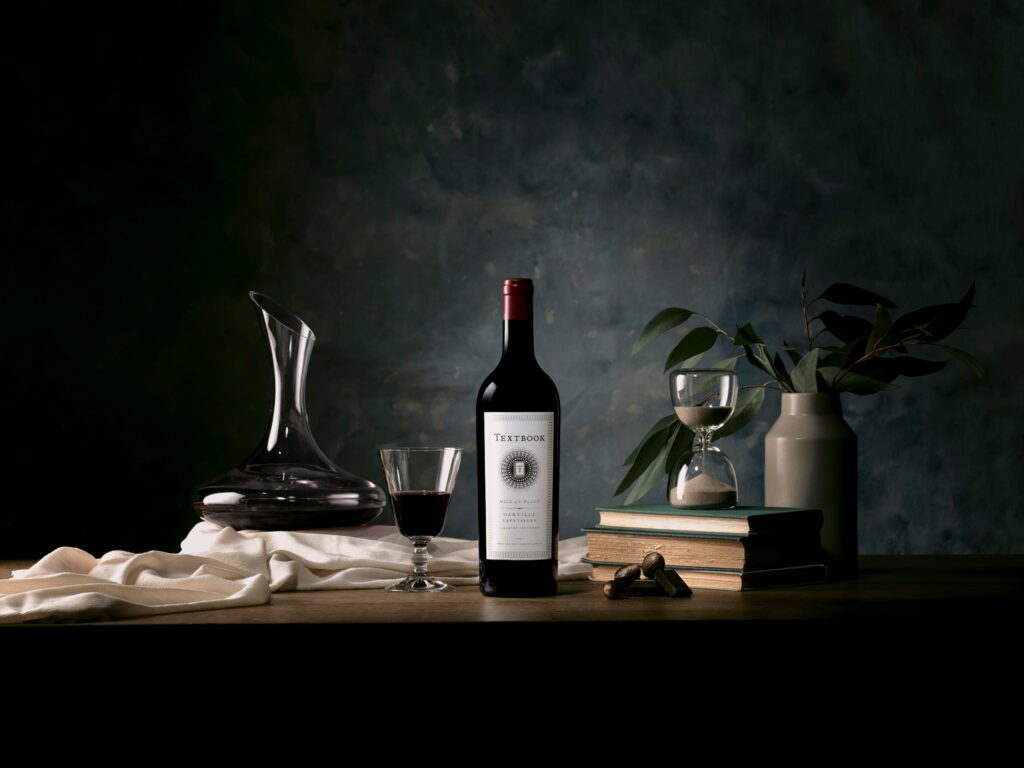
TEXTBOOK 2022 Mise-en-Place Cabernet Sauvignon, Oakville, Napa Valley ($80) When a chef gets ready to create a meal or a mixologist concocts a special cocktail, they prep the ingredients ahead of time: This is known as mise-en-place, or “everything in its place.” This wine indeed succeeds with respect to its sense of place: Oakville, whose diverse soils make it a premier location for grape-growing in Napa Valley. The blend of 92% Cabernet Sauvignon and 8% Merlot opens with dramatic notes of charred cedar, blackberry, dark chocolate, and umami. Silky tannins envelop the back of the palate as cherrywood and fleshy purple fruit are integrated into its powerful—and luxurious—character. 96 —M.M.
