
by Lars Leicht
We in the wine business are a curious bunch. There are so many career paths that would be easier and more profitable, with a quicker return—but that’s not what most of us are about, is it?
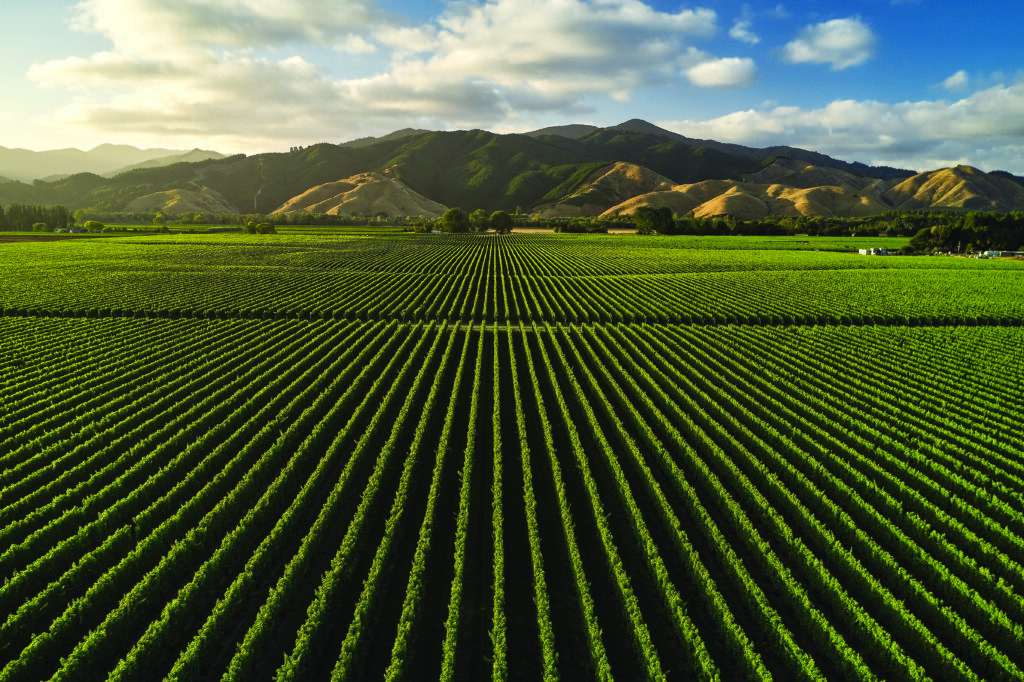
Take Phil and Chris Rose: Phil’s family has been farming in Marlborough, New Zealand, since 1870. Into the mid-20th century, their cash crop, so to speak, was alfalfa. It requires well-drained soils, good ventilation, and a reliable water source—all of which the Rose property on the Wairau River offered. Alfalfa can yield two or even three harvests per year under the right conditions and was in particularly high demand in Japan. That was all well and good until the worldwide oil crisis hit around 1973, which caused the Japanese economy to go bust while making the mechanical irrigation required for alfalfa cost-prohibitive.
The Roses chose winegrapes as an alternative crop “because it captured my imagination,” says Phil, but the transition was not without its challenges. Sure, like alfalfa, grapevines appreciate well-drained soil and a coastal breeze along with an available water supply despite having less need for irrigation. But winegrapes do not provide the immediate agricultural gratification of alfalfa; a viable harvest takes several years, and diligence in the vineyard is required year-round. For the Roses, quality time meant that their children were by their side daily while they planted, pruned, and harvested. “We all grew up in the vineyard,” noted Sam Rose, the fourth of Phil and Chris’ five children.
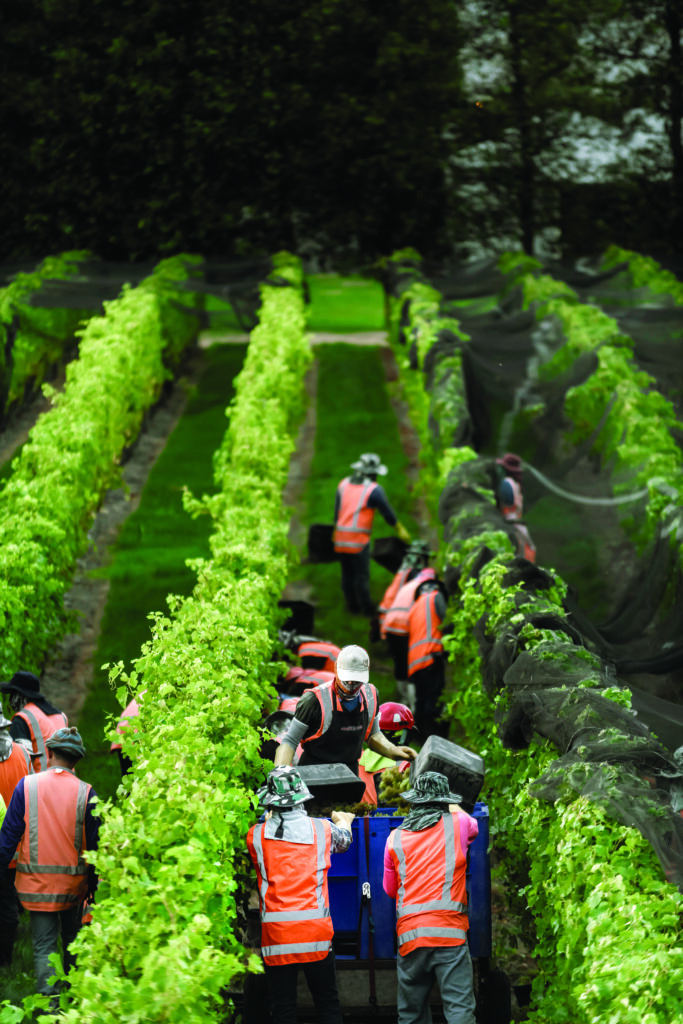
the morning.
New Zealand Sauvignon Blanc was virtually unheard of at the time, but in nearby Blenheim, a wine company called Montana had planted the first commercial vineyard in the region, which wasn’t initially slated to produce premium wines but rather Palomino and Müller-Thurgau for wine coolers and inexpensive bag-in-box wines.
Wine was also little understood from an agricultural perspective in Marlborough. The local zoning commission limited the permits for grape growing to a small area around Montana’s property, and there was strong resistance within the community to the Roses’ requested land use, Phil recalls: The board and neighboring farmers raised 56 objections, but he and Chris persisted. After two years of appeals, they finally got the right to plant their own estate vines and became Montana’s—and Marlborough’s—first contract growers in 1978.
The Roses planted Pinot Gris and Pinot Noir as well as Sauvignon Blanc. I recently asked Phil if that decision had more to do with foresight or fortune. “A little bit of both,” was his humble answer. “Nobody knew the potential of Marlborough Sauvignon Blanc at the time.” Those three varieties are today the mainstay of their portfolio, though they also farm small experimental plots of Albariño, Grüner Veltliner, Viognier, and Syrah, all found to be well suited to the conditions of the area.
Said conditions include the mainly stony soils found on the Roses’ estate, which allow for great drainage. The morning wind that blows down the valley warms the vines, but the afternoon breeze is cool, generating a large diurnal shift accompanied by low humidity. The proximity to Cloudy Bay on the Cook Strait that separates the North and South islands of New Zealand, meanwhile, gives Marlborough a distinct maritime influence. Climate change has yet to be a major issue here, according to Phil, who noted that “in general, our ripening and picking has been done over the same three-week range in the last 15 years.” The biggest dangers, he noted, have historically been spring frosts and flooding, which, along with other extreme weather events, seem to be happening more often.

From Growing to Winemaking
The Roses made the leap from contract growing to producing their own label, fittingly named Wairau River, in 1991 just as the reputation of and demand for Marlborough Sauvignon Blanc was on the rise—and as Sam completed his enology degree. He has spent the last three decades forging and defining the Wairau River wine style, working closely with winemaker Nick Entwistle. Three other Rose children are an integral part of Wairau River: Son Hamish is the winery’s viticulturist, managing all the family’s vineyards, while eldest daughter Pip runs the winery’s cellar door and restaurant, where her younger sister Caroline and Caroline’s partner, Tane Malcolm, are head chefs. Pip’s husband, Lindsay Parkinson, is CEO, looking after the wider Wairau River enterprise. “It’s key to give people responsibility that is their own,” Phil says of the family dynamic. “As a family, we are on 24/7. We don’t stop thinking about [the business], and we have many longtime employees who have the same dedication. We are 100% committed.”
My video call to the winery earlier this year served as evidence of Phil’s management style; rather than telling me the story one-on-one, he assembled Hamish, Lindsay, and other members of the team to share their perspectives as well. Phil spoke of the winery’s history but yielded to the others to seamlessly field my myriad questions according to their areas of responsibility. He was clearly proud of his team and the development of family succession: After making introductions around the table, he then pointed to himself and said, “And I’m the old gray bugger over here,” which made me and the others giggle. “A family can move fast,” pointed out Parkinson. “We don’t have the constraints of complex corporate structures.”
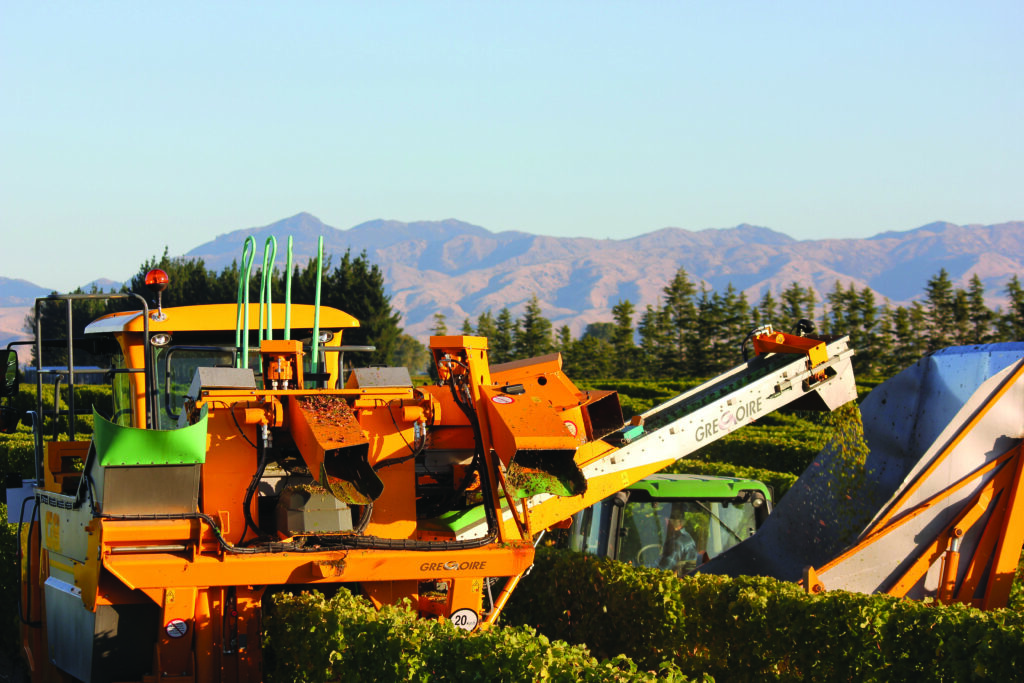
Wairau River owns and operates 15 vineyards in the Marlborough region, making wine from an annual yield of 8,000 tons of fruit. That makes them one of the leading family-owned wineries in New Zealand and one of the few to offer exclusively estate-bottled wines. Hamish described the operation as self-controlled from vine to bottle. “We grow, harvest, make, and bottle every drop,” he said, “and we’re not a small fry either.”
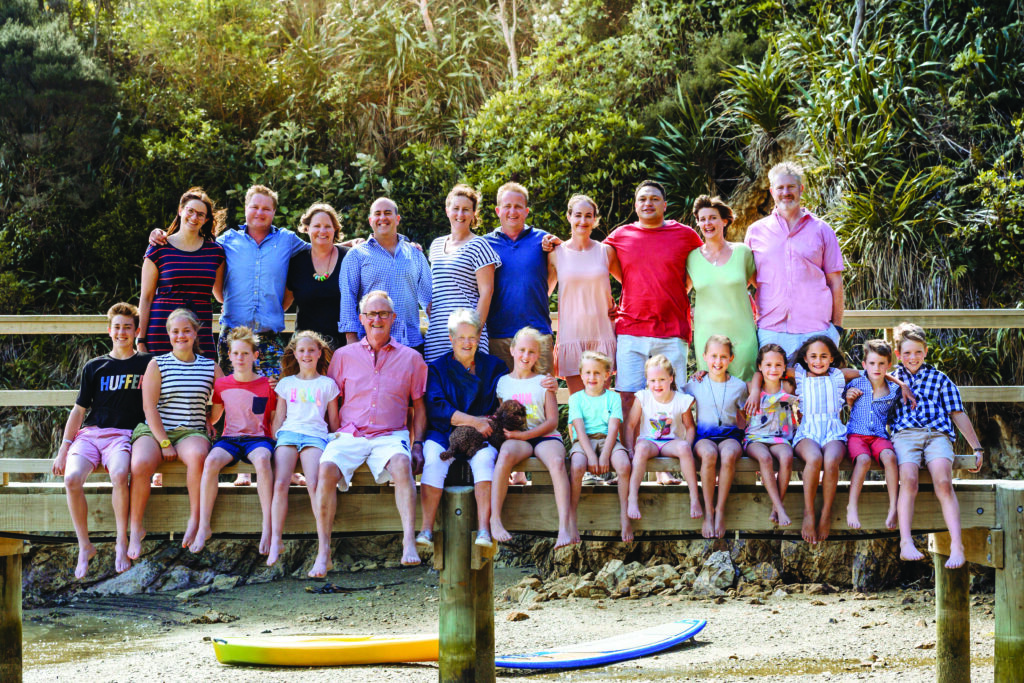
Phil also boasted that many of his 12 grandchildren actively participate in some stage of the process, and a few of the older ones have expressed a serious interest in the family business. I didn’t ask, but I suspect things would have worked out differently if they were still growing alfalfa.
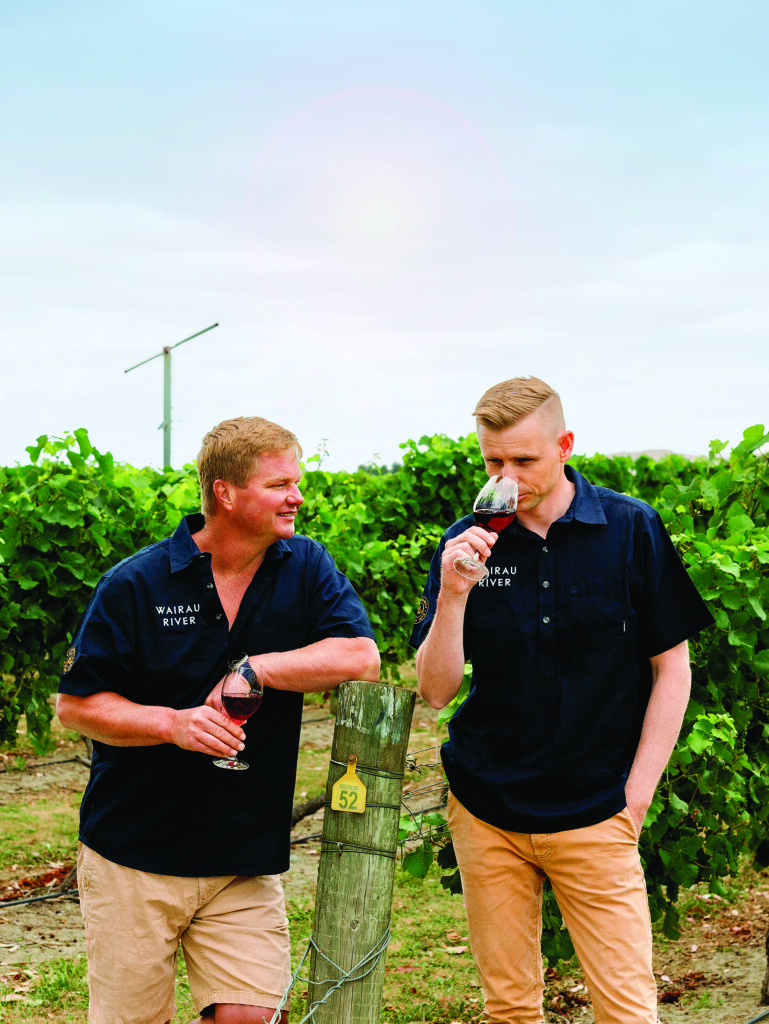
Attaining Varietal Purity
As one of New Zealand’s first vine growers, the Roses have had the advantage of time to hone their skills as well as preserve the unique asset of older vines to bring complexity to their wines. Planted in 1983, their Sauvignon Blanc vines, according to Nick, contribute intensity and weight, while the Pinot Gris vines, planted a few years later, give “ripeness and flavor without developing too much alcohol,” he added. The winemakers are determined to keep the Pinot Gris distinct, “staying away from the typical sweetness of Alsatian Pinot Gris and greenness of Pinot Grigio,” said Nick. “It needs to look like Pinot Gris. If we grew and fermented it like Sauvignon Blanc, it would be more like a Sauvignon Blanc.”
Another technique they use to accomplish that varietal purity is to ferment a small portion of the wine in older French oak barrels to help soften what Nick describes as its natural acidity and phenolics. Sam pointed out that “Pinot Gris can be quite simple without a little of that. It gives it a little extra roundness on the back palate, but we have to be careful not to overdo it.”
The Roses were also early adopters of Pinot Noir in Marlborough and are pleased with how it grows there, according to Nick, though the yields and concentration vary from year to year. He said they have worked with various clones, discovering that those with thicker skins give a more consistent fruit set. The grapes are picked in the cool early-morning hours; some of the tanks are left to ferment with native yeasts while others are inoculated with commercial yeasts, and the resulting wine is a blend of the two. While more challenging to control, the natural fermentation gives more “midpalate texture and savory notes,” according to Nick. The wine is then aged in (20%–25% new) French oak barrels: “Any more than that and the oak just sits off to the side” rather than integrating with the fruit, observed Sam.
Achieving a Sense of Place Through House Style
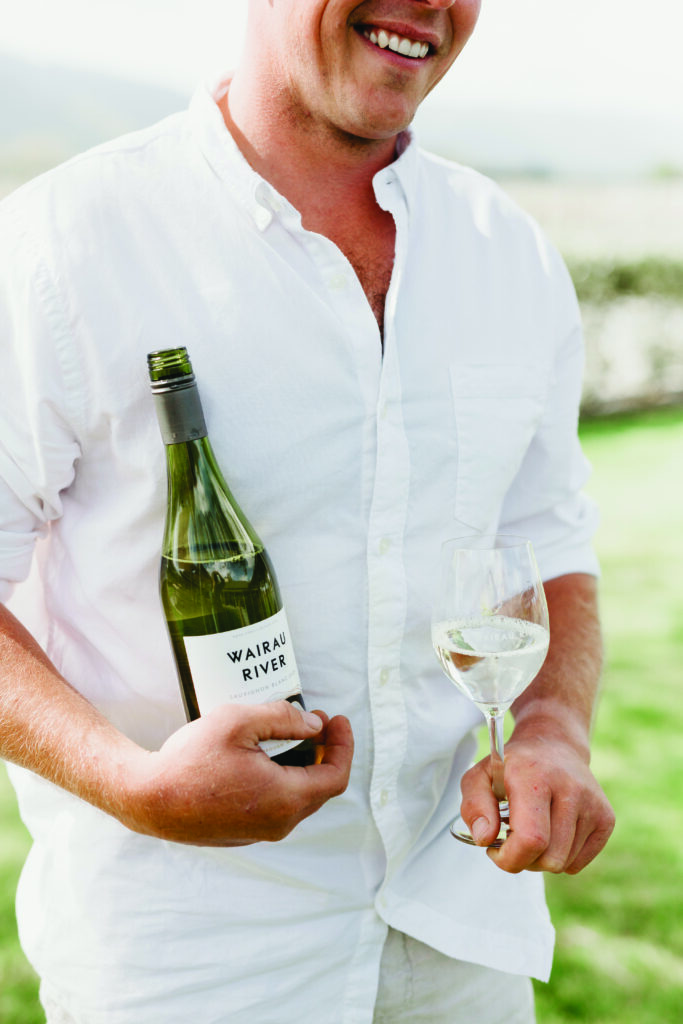
Phil likes to describe Wairau River wines as being made in a “very classic style” that “takes the [drinker] on a journey.” Lindsay described a “tropical element” across the board, with the Sauvignon Blanc showing citrus including pink grapefruit on the finish along with minerality thanks to the stony soils. Nick, for his part, noted that the key to the house style is consistent winemaking from year to year that shows a certain restraint.
Indeed, rather than being in your face, these wines are expressive and savory. Across the board, my own tasting notes observed that restraint and are much in line with those from publisher Meridith May (see sidebar). The Pinot Gris showed flavors of honeysuckle, ripe cantaloupe, and Asian pear with a deliciously long finish, while the Pinot Noir showed juicy red fruit, pomegranate, and a hint of sandalwood. Finally, the Sauvignon Blanc showed bright white fruit and minerality with a hint of dried herbs, its flavors of grapefruit and mandarin orange pith making for a clean finish. Its structure allows for longer aging than is typically expected of a Sauvignon Blanc. “We would love for people to just take their time and let it age,” said Nick, declaring that he would rather release the wine six months later if demand were not so high.
The Roses have long been pioneers in Marlborough winemaking, and their wines are hallmarks for the region. Ironically, most of their neighbors who early on objected to the land-use conversion eventually planted their own vines. Phil and Chris Rose could very well have found an easier way to make a living, but it almost certainly would not have been as successful or gratifying.
tasting notes
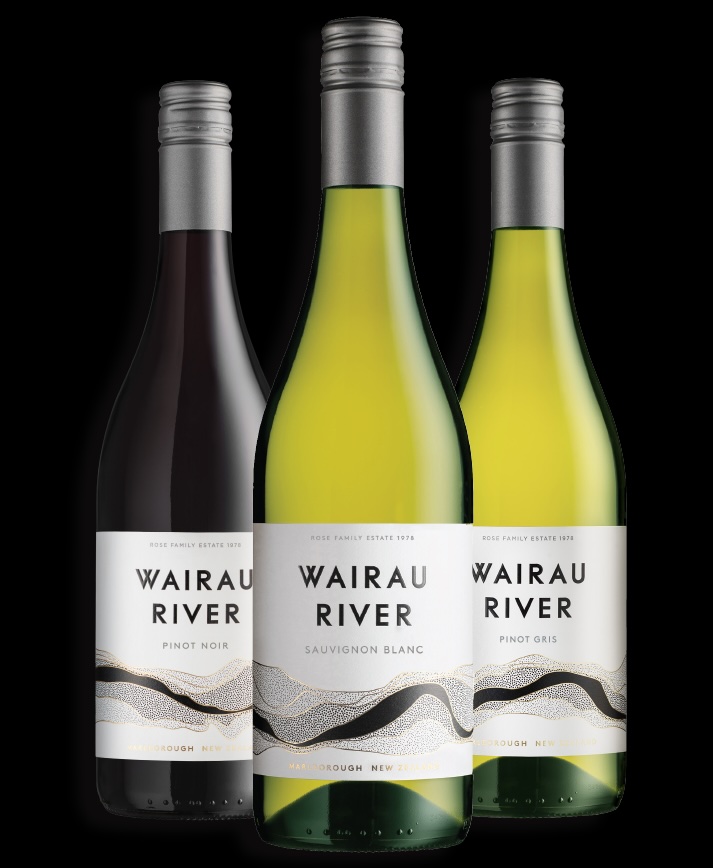
Wairau River 2022 Pinot Gris, Marlborough, New Zealand ($22)
A juicy showpiece with lush summer pear on the nose and palate. A whisper of honeysuckle is uplifted by refined acidity. 93 —Meridith May
Wairau River 2023 Sauvignon Blanc, Marlborough, New Zealand ($22)
With a mesmerizing fragrance of lime chiffon, this aromatic white takes off with salty lemon cake. Tuned up with fine acidity, notes of honeyed pear, kiwi, and chamomile are clean and fresh. 92 —M.M.
Wairau River 2022 Pinot Noir, Marlborough, New Zealand ($26)
Earth tones and dusty red tea gratify, surrounded by red cherry cola. Bright cranberry seasoned with cinnamon emerges midway and lasts through the finish. 93 —M.M.
