
by Ruth Tobias
“Our biggest assets are our vineyard [and] the way that we work with the soil,” says Doña Paula marketing manager Federico Ontanilla. Communicating that is a top priority in 2024, he adds: “Our dream is to be one of the most relevant Argentine brands in the U.S.”
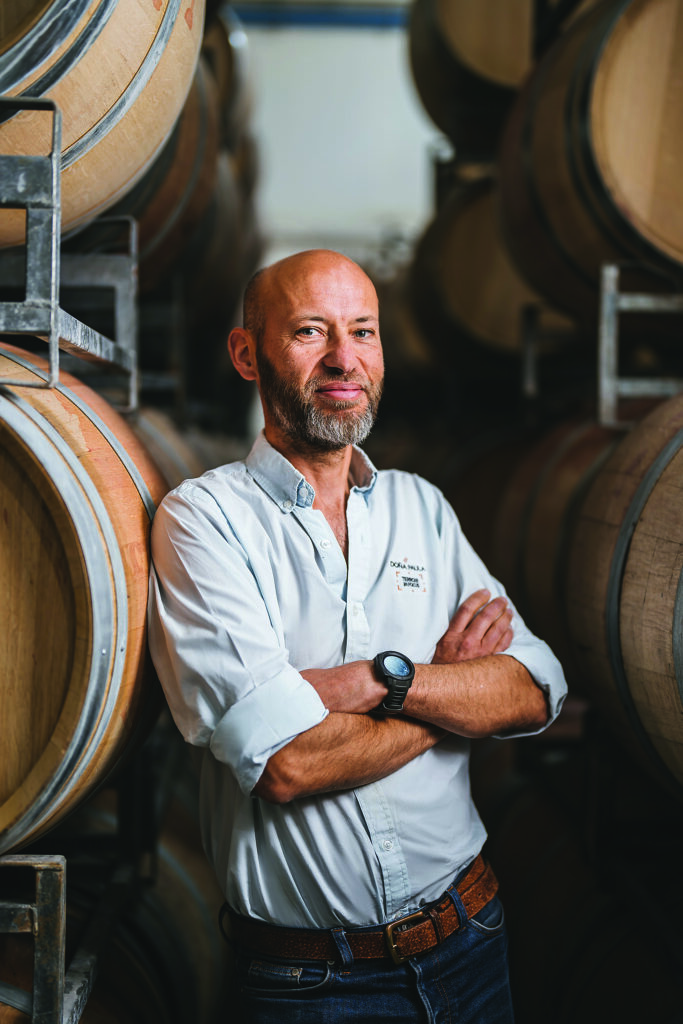
Doña Paula director of viticulture and enology Martín Kaiser.
The estate of Chile-based wine company Viña Santa Rita sits on land that once belonged to Paula Jaraquemada Alquizar, who became a folk heroine during the Spanish American wars of independence in the early 19th century for providing shelter to 120 soldiers evading capture by the colonial army—Argentines as well as Chileans among them. Upon establishing a winery in Argentina’s Mendoza province in 1997, the late Ricardo Claro, then owner of Santa Rita, named it Doña Paula to “pay tribute to this symbolic union between both countries,” as marketing manager Federico Ontanilla puts it.
That sense of connection may explain why, initially, Claro was looking to make wines similar to those Santa Rita produced in its homeland: “The objective,” according to Doña Paula director of viticulture and enology Martín Kaiser, “[was] to create Cabernet Sauvignon with all the knowledge that he had for the Cabernet in Chile.” But the first property he purchased, El Alto Vineyard in the Luján de Cuyo subregion of Ugarteche, was home only to Malbec—and, says Kaiser, “he realized that the Malbec of Luján de Cuyo was great.” While his team would go on to plant Cabernet Sauvignon and other grapes as well, their focus from that point forward would be on crafting 100% estate-grown wines that expressed the great terroirs of Mendoza—not only in Luján de Cuyo but also in the Valle de Uco, where Doña Paula has three vineyards that bring its total planted holdings to 800 hectares: Alluvia in Gualtallary, Tupungato; Los Cerezos in Cordón del Plata, Tupungato; and Los Indios in Cordón el Cepillo, San Carlos.
If there’s one label in the producer’s large and diverse portfolio that best encapsulates that mission, it’s arguably the flagship, Selección de Bodega, which launched in 1999 and “represents [the quest] to make the best Malbec that Doña Paula can create through its 25-year history,” in Ontanilla’s words. Originally sourced from Luján de Cuyo, it eventually became a blend of fruit from both Luján and the Valle de Uco; today it hails entirely from the latter, specifically the aforementioned Alluvia Vineyard, which is planted on deep, rocky clay-loam soils at 4,450 feet in elevation. “Also the winemaking has been changing little by little,” says Kaiser. For instance, “We used to age this wine 100% in new French oak, but now we are using more second-, third-, [and] fourth-use barrels. We are working a lot with microvinifications [and] native yeast; [what’s more,] the wine will have from the 2022 [vintage] a bit of whole-cluster fermentation. So we’re always looking for how we can make it a bit more special year after year” while retaining its character, which “from the beginning [has been] a more fruity, fresh style instead of a very oaky or full-bodied wine,” Kaiser adds. “But at the same time, you have a lot of layers that are nice to discover.”
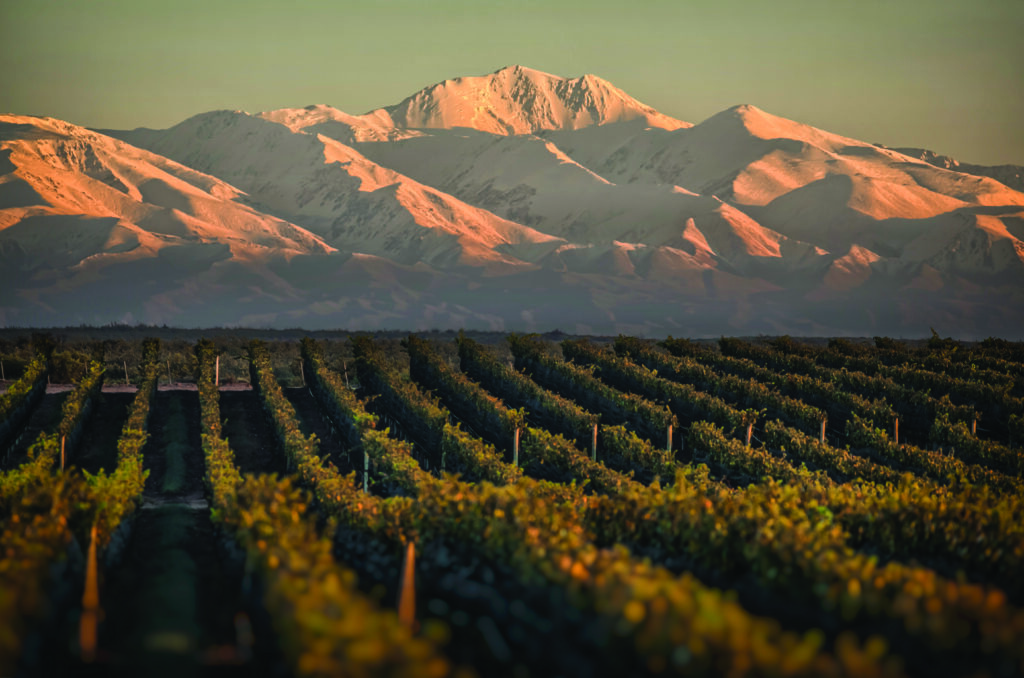
Los Indios Vineyard in the Valle de Uco.
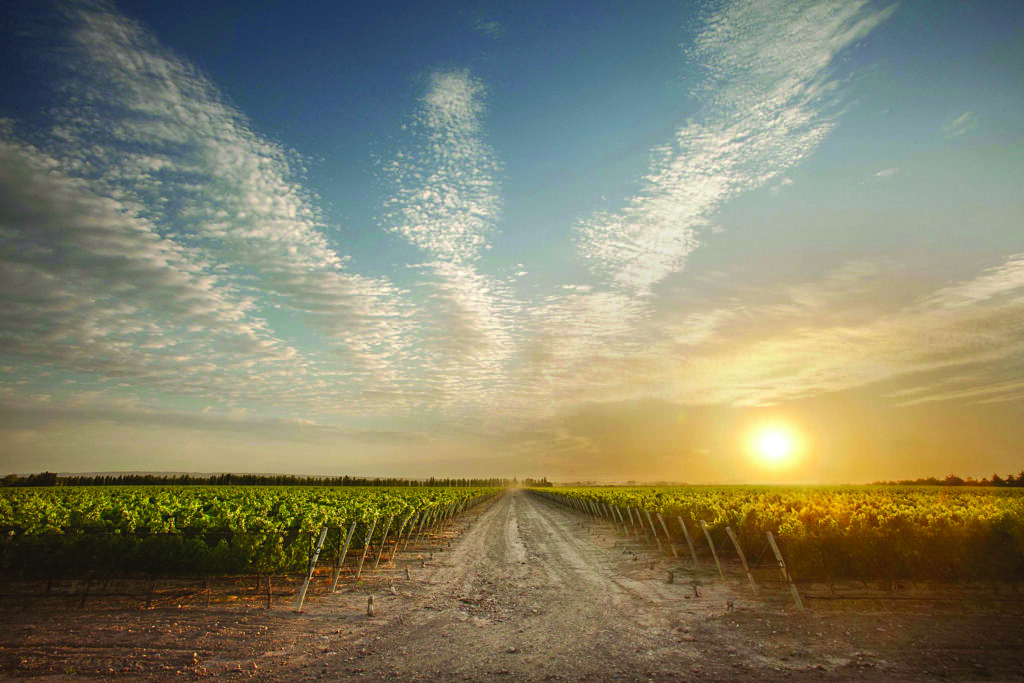
El Alto Vineyard in Luján de Cuyo.
Of course, Doña Paula’s Estate line also clearly reflects its goal of capturing the essence of Mendoza’s terroirs and their influence on the grape varieties they harbor. Containing fruit from both Alluvia and Los Indios, the Estate Malbec is meant “to be drunk [relatively] young,” says Kaiser. “So only a part of the wine ages in barrel; the rest ages in concrete tanks, and then we blend. [It’s] lighter in terms of texture, but at the same time, it’s very vibrant and . . . very aromatic, floral, and herbal.” Malbec also makes up the majority of two Estate red blends from El Alto: The Blue Edition, in which it’s blended with Pinot Noir and Bonarda, and the Black Edition, which is rounded out by Cabernet Sauvignon and Petit Verdot. The Estate Cabernet Sauvignon likewise comes from El Alto, where the altitude’s slightly lower (3,450 feet) and the climate slightly warmer than that of Alluvia, the sole source of the Estate Pinot Noir, Chardonnay, and Riesling; finally, the Estate Sauvignon Blanc combines fruit from Alluvia and Los Cerezos—Doña Paula’s highest- and lowest-altitude properties, respectively.
On that note, while Selección de Bodega and the Estate line are its key players in the U.S. market, the producer’s Altitude Series is worth mentioning insofar as it’s dedicated to exploring the role elevation plays in Argentine viticulture: Named for the average height in meters of the plots that contribute the grapes, each single-vineyard wine in the collection “talks about its place [of origin],” says Kaiser. For instance, the 969, a blend of Petit Verdot, Bonarda, and Malbec from El Alto in Luján de Cuyo, “has more personality—it’s a little bit more tense” than the 1100 from Los Indios in the southern part of the Valle de Uco, where “it’s warm during the day but cold at night, especially because it is very, very close to the Andes. That creates a very special character” in the blend of Malbec, Cabernet Sauvignon, and Syrah, which is “very elegant, [with] soft tannins and a velvety texture—it’s the nice guy that everybody loves,” he adds. From Alluvia further north, the 1350 combines Cabernet Franc, Malbec, and “a touch of a variety called Casavecchia that we introduced [to] Argentina from Campania in Italy,” Kaiser explains. “In fact we are the only producer of this grape maybe in America. It’s fantastic because [it] has a very big structure and tannins but it [also] makes a wine very juicy.”
Nor does the portfolio end there. Also of note is Doña Paula’s entry-level line of six wines, Los Cardos, whose name translates as “The Thistles” in reference to local lore; according to Ontanilla, “The people who work in the fields have this legend that says when you see thistle flowers in the land, it’s a sign of a good harvest.” And then there’s Unique: Consisting of a Malbec and a soon-to-launch Sauvignon Blanc, it will make its debut in the U.S. later this year as the certified-sustainable, -vegan, and –gluten free producer’s first organic line.
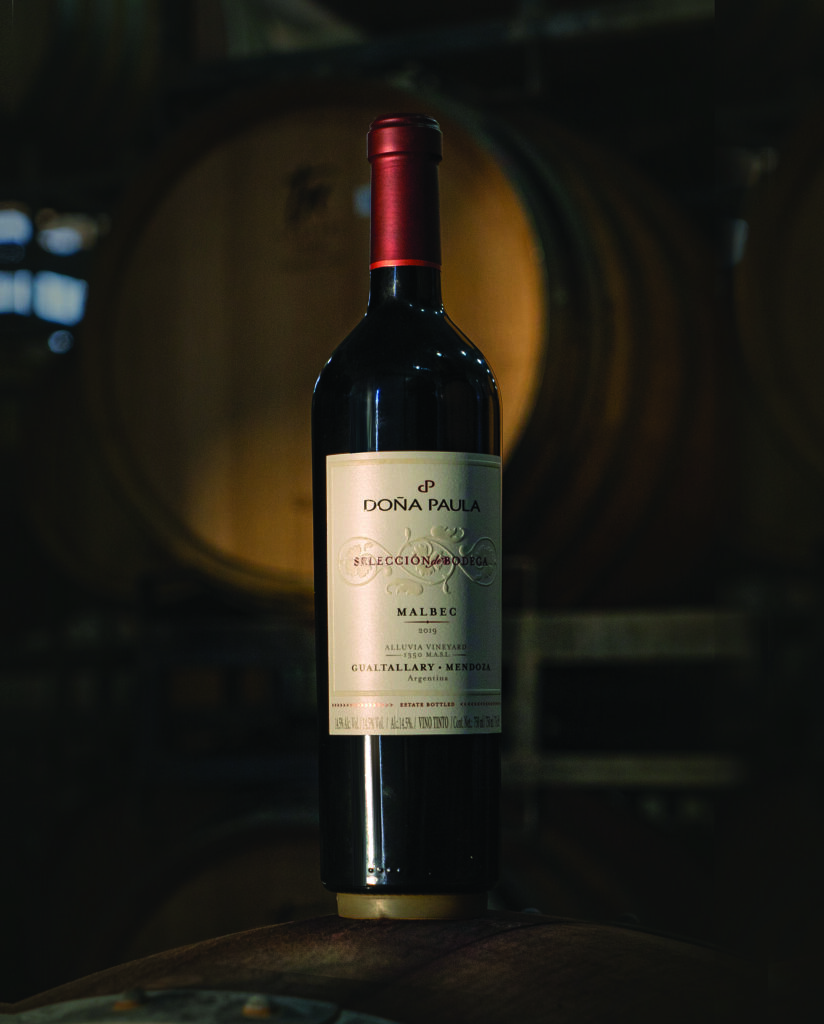
Selección de Bodega is Doña Paula’s icon wine.
It all goes to show that while Doña Paula “is in the top ten of the biggest export wineries in Argentina, we have this bodega spirit—we feel and the consumer feels that we’re a boutique winery because we are 100% estate grown,” says Ontanilla. “Our biggest assets are our vineyards, our knowledge and administration of the vineyards, [and] the way that we work with the soil.” Communicating that across their biggest export market is a top priority in 2024, he adds: “Our dream is to be one of the most relevant Argentine brands in the U.S.”
