by Kate Newton
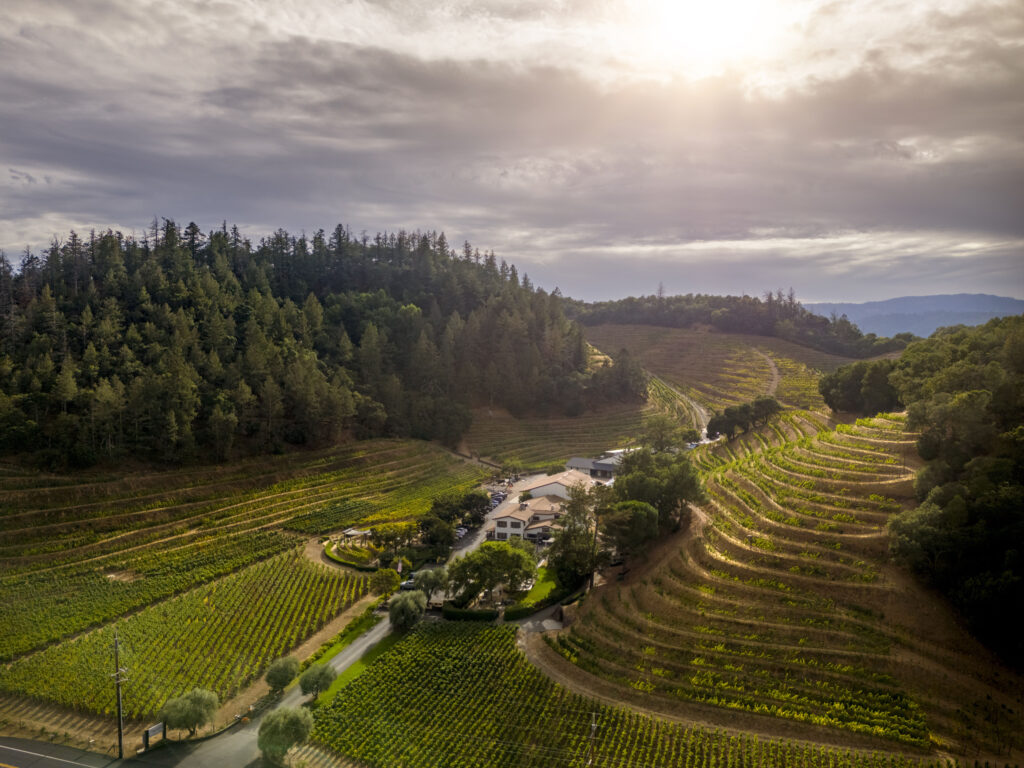
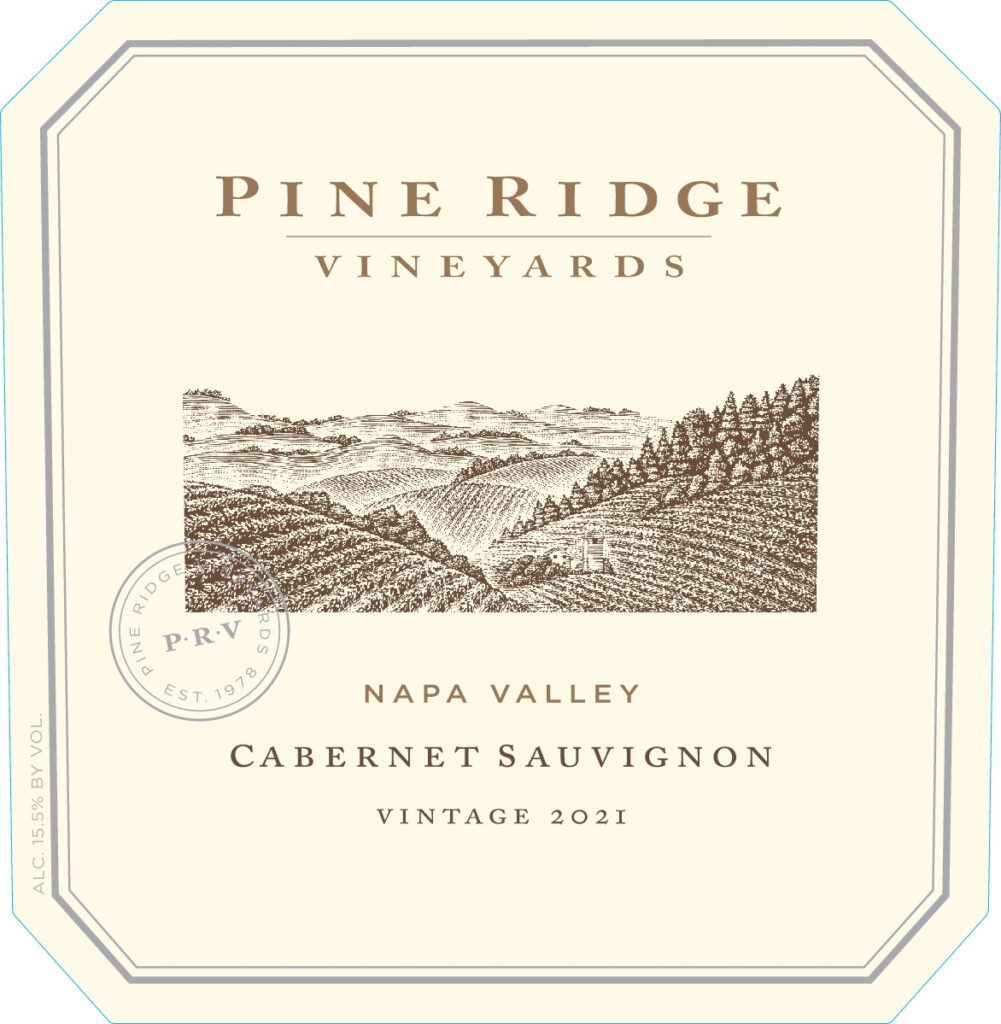
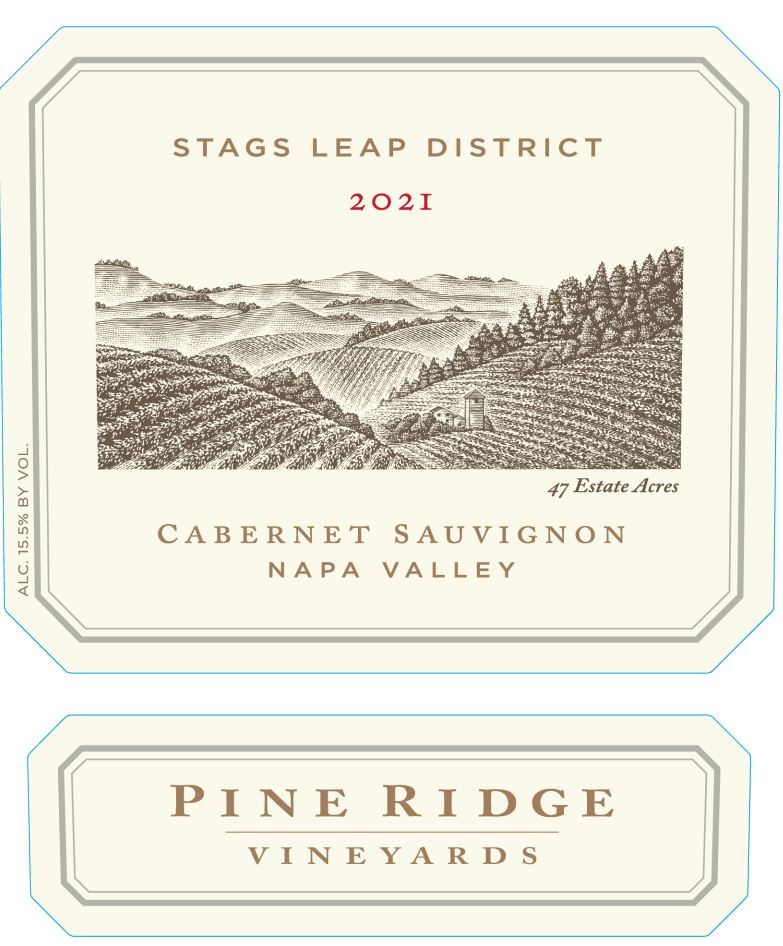
Pine Ridge Vineyards estate winemaker Josh Mendoza Widaman may have a map of the Stags Leap District ready to reference on the wall of his office—it was clearly visible in the background of a recent Zoom interview with him and fellow winemaker Colleen FitzGerald—but it’s hardly necessary considering that he knows the Napa Valley region like the back of his hand. He’s spent much of the past 25 years immersing himself in its terroir, working his very first harvest at Stags’ Leap Winery, “where I fell in love with the opportunity to make the style of wines from this area,” he said; that was followed by a stint at Chimney Rock before an extended time away, but in 2021, he found himself “coming back to a place where, from a winemaking perspective . . . I was born and raised, so to speak,” leading the Pine Ridge team in producing wines from its 160 acres of estate vineyards, 47 of which are in Stags Leap.

FitzGerald, for her part, started her tenure at Pine Ridge over a decade ago as a lab intern and now serves as head winemaker for the winery’s Chenin Blanc + Viognier label, which is nearing its 30th vintage and has proved incredibly popular, reaching an annual production of roughly 200,000 cases. Noting that “Chenin Blanc used to be very big in the Napa Valley” before a large portion of its plantings were exchanged for varieties like Cabernet Sauvignon, FitzGerald explained that Pine Ridge “started making the blend as an experiment and just kept going. . . . The market’s changing a little bit, with people wanting to go outside of the box of what Chardonnay and Sauvignon Blanc have to offer. It’s been a fun brand to be a part of, just because we’ve moved the sourcing mostly over to Clarksburg, which is a really great area to make Chenin Blanc—it has the maritime influence.” And because she pulls double duty in the winery, helping Mendoza Widaman and their colleagues to oversee production of Pine Ridge’s red wines, she added that “it’s a really fun dichotomy to be able to work on a big white-wine program and also be able to work on a smaller-production Cabernet.”
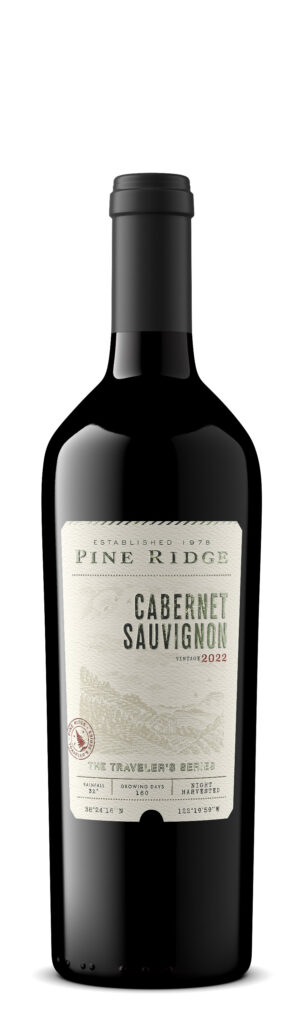
That dichotomy evolved further a few years ago, when Pine Ridge began developing its newest label, the Traveler’s Series, to complement its existing lineup of Cabernet Sauvignons. While the winery had long relied primarily on the Stags Leap District—its home since its founding in 1978—and other Napa Valley subregions to supply fruit for its acclaimed reds, it sought to cast a wider net for Traveler’s, channeling the same exploratory ethos it had when it launched the Chenin Blanc + Viognier all those years ago. “We like to think of our Cabernet program kind of like a dartboard, and as you go higher and higher in our price points and quality levels, you’re starting on the outside of the dartboard and you continue to move in toward the bull’s-eye. We have our Traveler’s Series, then you have our Napa Cab that focuses a little bit more, and then you have our AVA and Vineyard Series wines that really dial in on what we’re known for,” said Mendoza Widaman. “We’re looking at engaging people who [want] to explore all the world has to offer . . . so with that kind of mindset, it felt like it made sense to tell a story where we’re peeking under every rock on all sides of our county and looking for fruit that has a similar profile to what we’re so well known for.”
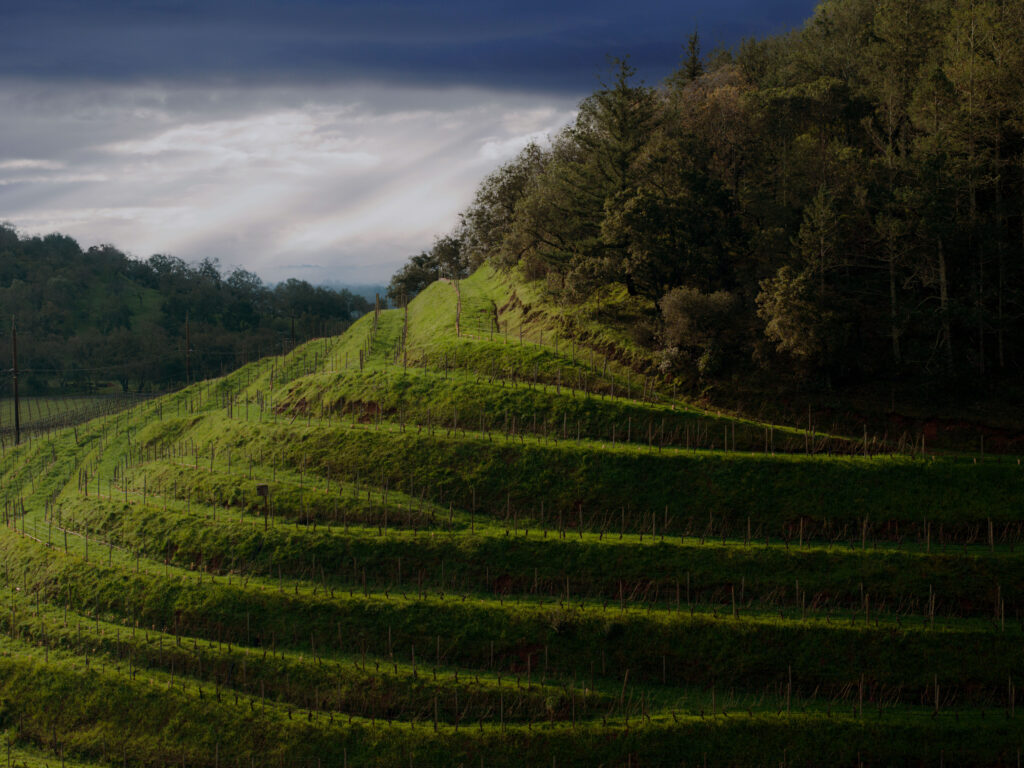
One detour led them west across the Napa border to Solano County, which, given the similarities in soil and climate, delivered just that with “a significant cost difference,” in Mendoza Widaman’s words—enabling them to accomplish their goal of filling a gap in their portfolio. “[Our flagship] Napa Valley Cabernet Sauvignon is now at a price point where we were no longer able to reach consumers in by-the-glass programs at restaurants and provide an entry-level Cabernet on grocery and wine shop shelves,” he explained. “This is something [where] we were able to vastly decrease the price of the wine but still give the kind of quality that we expect of ourselves and that we want to introduce to consumers we otherwise wouldn’t have [access to].”
With fruit from Sonoma County rounding out the blend, the 2021 vintage made its debut last year in California, Florida, and Texas, but from the 2022 vintage onward, the wine is being distributed throughout the country. For the 2023 edition, which Mendoza Widaman called a “once-in-a-decade” vintage, Pine Ridge widened its scope even further to Contra Costa County, introducing it as the third element of the blend in place of Sonoma to contribute a more rustic and savory character. While both winemakers noted that they expect the sources for the Traveler’s Series to continue to evolve in future years, Mendoza Widaman emphasized that “the growers that we work with are phenomenal—it doesn’t matter where the fruit comes from. Gustavo Aviña is our viticulture director of 21 years, and he ended up running into a grower that he’s known since he was growing up in Mexico, and both of them have lifted and elevated grape growing here in Napa. It just so happens that his good friend planted some fruit just over the hill and farms that property, and in Contra Costa, we’re working with another grower from the Stags Leap District that happens to have acres down there. While the weather is very similar, most importantly the winegrowing is extremely similar to [our estate practices to deliver] the quality we’re looking for.”
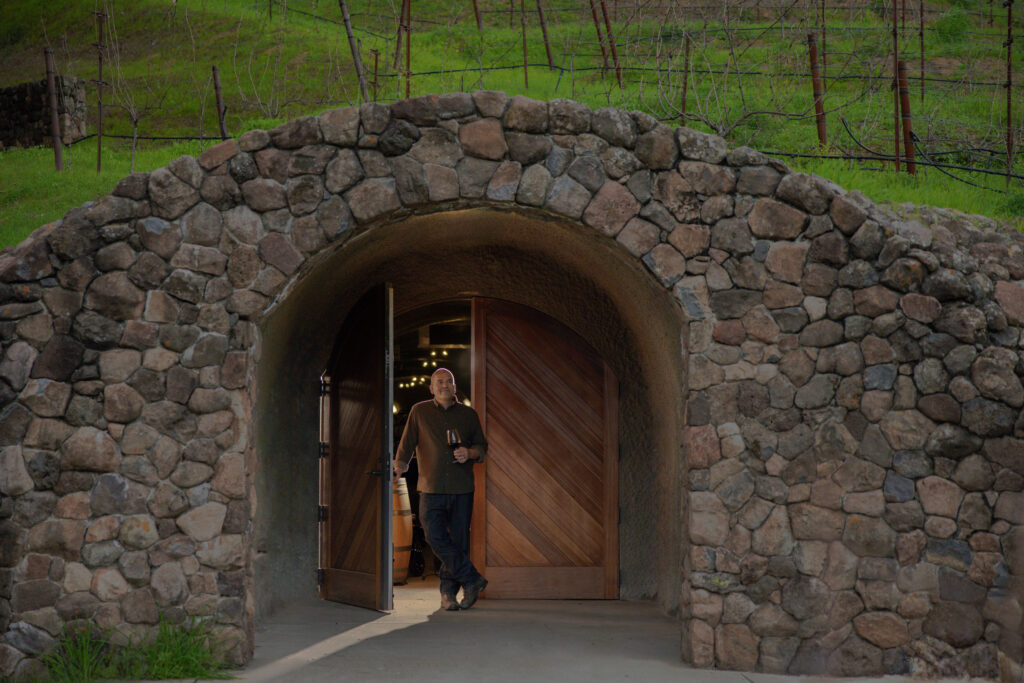
The same standard is applied in the winery, where the grapes for Traveler’s are “treated the same as the other wines that we bring to the estate,” FitzGerald noted: After a three- to four-day cold soak to enhance color and rein in the tannin profile, the fruit undergoes fermentation and 12 months of aging in (40% new) oak in Pine Ridge’s caves before the separate vineyard lots are blended with a goal of crafting an approachable yet complex wine defined by layers of fruit and a plush texture. “It’s a wine we also want to be more drinkable now, so it’s able to age if somebody wants to but also something that you can pick up by the glass at a restaurant that has smooth tannins, is round and rich, and has all of the fruit you want from it to pair with whatever you’re having,” she added. “It’s immediately pleasing.”
Pine Ridge is getting instant gratification of its own from the wine’s packaging, made with lightweight glass that results in a roughly 34% reduction in carbon emissions compared to standard glass—a trend in alignment with the sustainability goals of the International Wineries for Climate Action organization, of which Pine Ridge’s parent company, Crimson Wine Group, is a member. With the release of the Traveler’s Series, the winery also debuted a logo it designed in-house to highlight the use of the lightweight glass—an initiative the team aims to expand across the portfolio as they continue to engage with consumers on the benefits of the transition. “There’s no reason to [package wine] in heavyweight glass beyond consumer perception that heavyweight glass is a better-quality bottle,” said FitzGerald. “We’re trying to change that perception, because that isn’t true.”
As the winery approaches its 50th anniversary, FitzGerald, Mendoza Widaman, and their colleagues are adjusting their own perceptions of what the future of winemaking in the Stags Leap District and its neighboring regions might entail in the face of climate change and other challenges impacting the industry. In that regard, launching the Traveler’s Series has served as a reminder that embracing change is the only way forward, namely through practices such as replanting areas of their vineyards to what they’re deeming “climate-resistant” varieties like Bobal, Saperavi, and Negro Amaro as well as adjusting variables like row orientation and canopy management to make the vines more conducive to dry farming. “The thing that drives us is that we can continue to fine-tune and perfect that which we have not completely understood,” Mendoza Widaman said. “We as a team are just pushing and focusing and retasting and reblending until we all get to a final point where we know that at night when we lay our heads down on the pillow, there’s nobody anywhere who could have done it as well as we did—and that’s what keeps it interesting.”