by Ruth Tobias
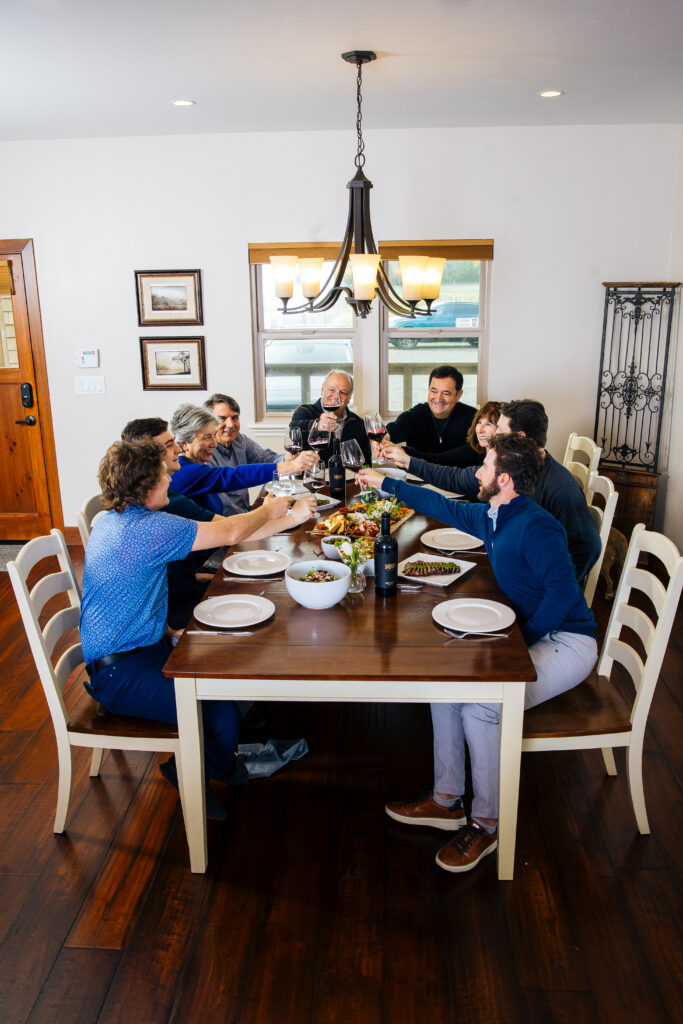
Every January, the Indelicato family gets together to make sausage—400 pounds’ worth. “We use the original recipe from my grandfather Gaspare and my [great-]uncle Sam, and we make it in the same basement . . . that it’s been made in since the house was built in the ’50s,” explains Delicato Family Wines CEO Chris Indelicato. “Friends and neighbors come, and everybody has one task that they sort of evolved to do over time, and it’s a really good time. I think it’s become more about the eating and the socializing than the sausage making, but we do manage to make the 400 pounds for the year.”
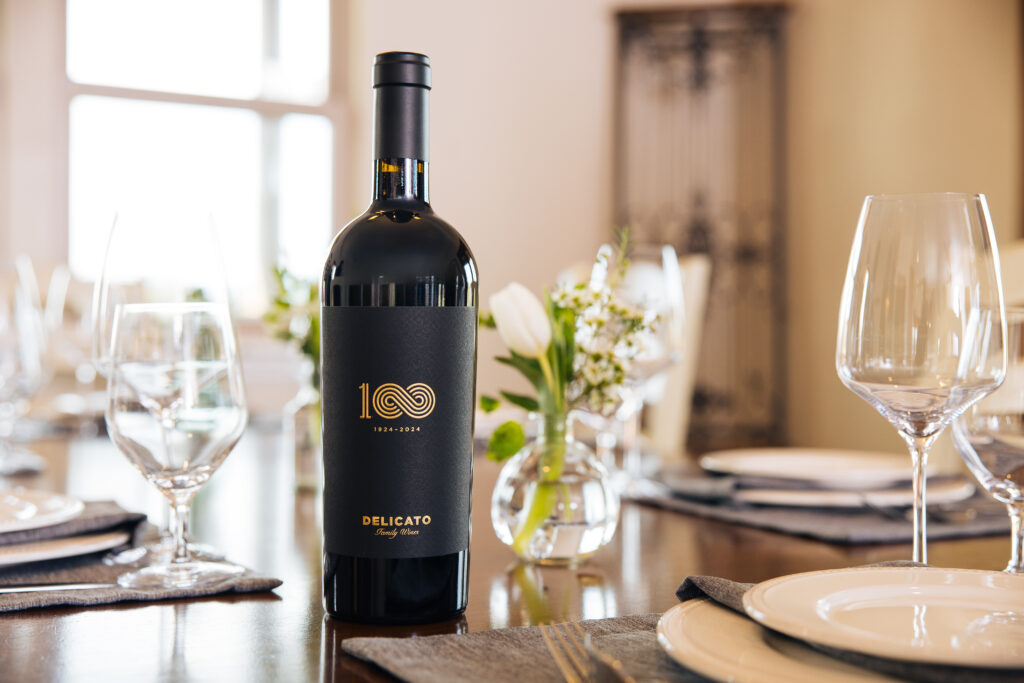
This little tidbit reveals a lot about how the family succeeds as stewards of what is now—100 years since Gaspare planted his first vineyard in Manteca, California—the fifth-largest wine company in the U.S. and the third-largest exporter, with total annual sales of more than 16 million cases. For one thing, they’re close-knit. For another, they think big. And for a third, they think ahead (you don’t whip up one-fifth of a ton of sausage without some solid meal-planning skills). As Chris puts it, “The wine business is really a long-term game. The market, with the economy, ebbs and flows, but we can always do the right thing and continue to invest in our people, in the quality of our wine, in our customers and giving them what they need; if you can get all those things aligned and hold steady in how you approach the business, it’s a huge advantage.”

Humble Beginnings,
Great Growth
Granted, Gaspare himself couldn’t possibly have had the foresight to imagine his modest grape-growing venture would one day become an international enterprise. But what he did have was gumption—as the entire Indelicato family discovered last summer on a trip to Sicily. “We wanted to go see where he grew up. . . . I kinda knew we were in trouble when we got to the airport and someone asked us where we were going. We said ‘Campobello di Mazara’ and they looked at us like, ‘Why would you go there?’” Chris recalls with a laugh. “We took a two-hour bus ride, the precipitously winding roads felt like we were in Costa Rica, and when we got there . . . there was absolutely nothing going on. It’s a beautiful little town, but I don’t think anything’s changed there since Gaspare left in 1912, and it explained why he left. That generation had courage. He got on a boat with no money, no language, no job . . . and came over to America and worked his way around the country. He was in New York and then Chicago; he worked up in the state of Washington making bricks and then worked in the lumber mills; and then he came over to California and was part of the crew that built the Hetch Hetchy dam . . . and that’s where he got enough money to buy 68 acres in Manteca, which reminded him of Italy: hot and sandy ground.”
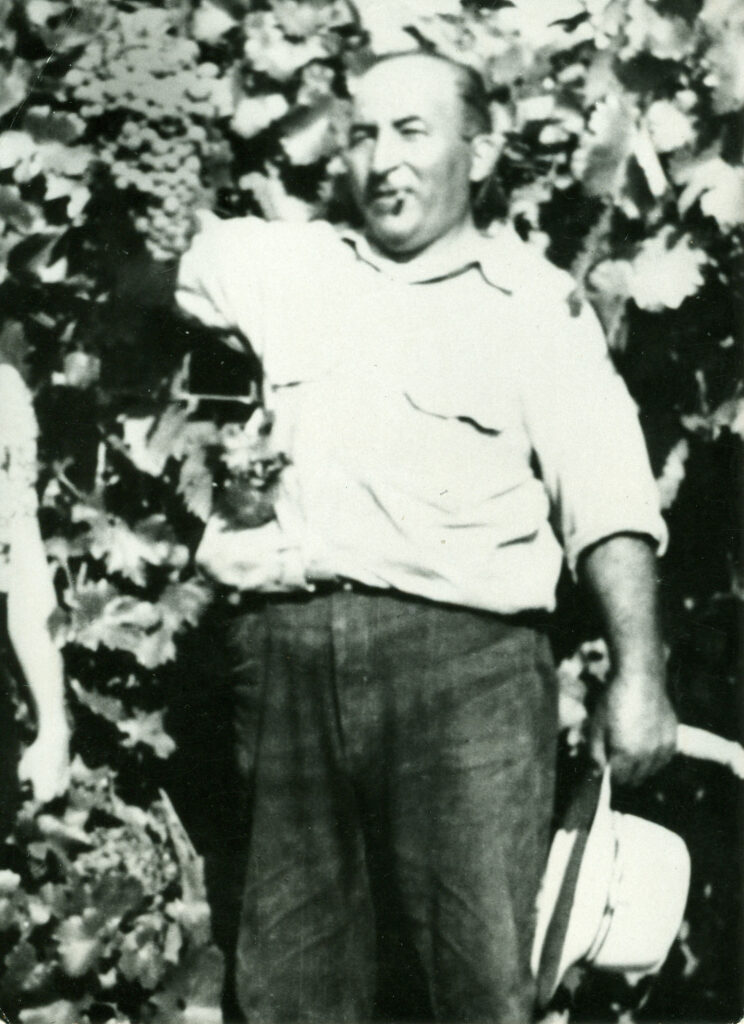
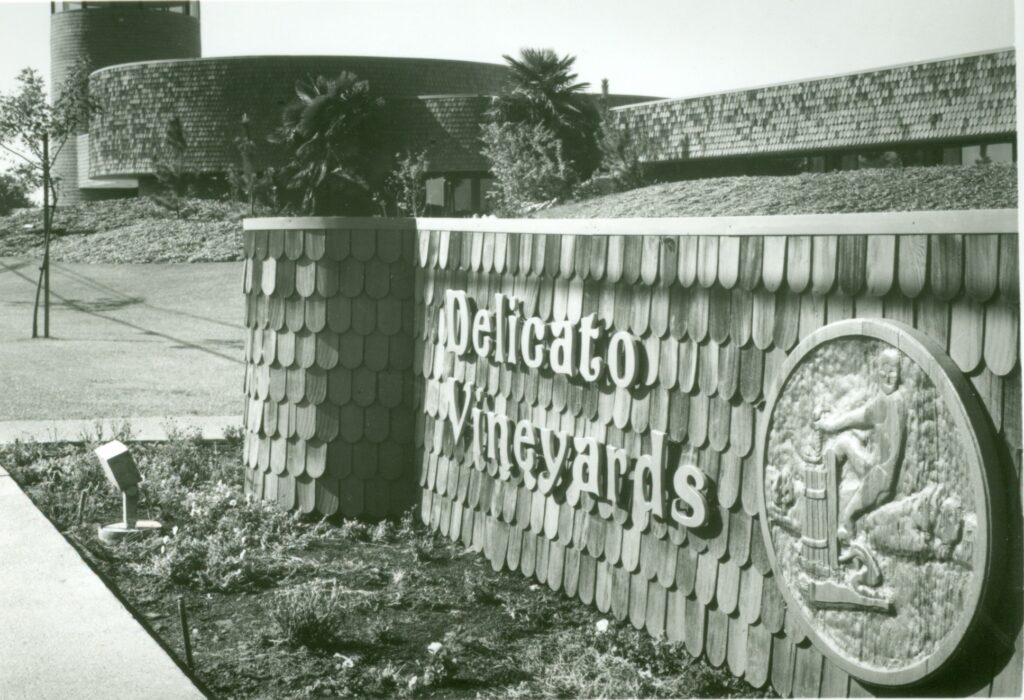
That was 1924. Initially, Gaspare’s business was strictly growing and selling fruit. But by the mid-1930s, he had started making wine for neighbors and friends; in the decades to follow, he’d be joined by his sons Tony, Frank, and Vince, who took over after he passed away in 1962. “They were really just a local little winery until about 1970,” says Chris. “Then they started making wine for Almaden, which had a couple of big brands . . . and started growing the volume. My dad, Tony, had an amazing contract that allowed him to sell them twice what he produced the year before. . . . They quietly built up a supply business, roughly 6 million cases.”

Meanwhile, the third generation—including Chris’ brother Jay, who today serves as COO; director of hospitality and retail sales Marie Mathews; family ambassador Cheryl Indelicato; Michael Indelicato, who works in customer service; and Frank Indelicato, now retired—was growing up around the business. “We started working there in the early ’70s and did that all through high school,” Chris says. “I worked in the tasting room; then I worked in the vineyards; then we moved into maintenance and as teenagers actually . . . overhauled an entire winery in the off-season. During harvest we would work on the weekends, and during the holidays we would help finish the wine. We would also load up delivery trucks and deliver to San Francisco, dropping off wine . . . and visiting with liquor store owners and restaurateurs—you’d always get a good lunch from the Italian delis. It was a great experience to do all of that.”
After making their way in the world in various capacities—“We had a requirement to go work outside the business for a minimum of five years,” explains Chris—they all returned to the fold, where they would eventually help usher in the next phase of Delicato’s growth. “Around 2000, the second generation was starting to retire, and we said, ‘Hey, we’re going to get in the branded case-goods business’—because even though we had built an enormous asset base making wine for large national brands, we wanted to move into a business that was more sustainable long-term,” Chris notes. “Being in the commodity-based side of the business is good, but it’s also very tough, and as companies started consolidating, there were less customers for us to sell to. So for us, growing the branding business was amazing; by 2010, we had a handful of brands taking off,” from Gnarly Head to Noble Vines.
Inside the Portfolio
Chief among them was boxed-wine label Bota Box. “I guess we all get one unicorn brand in our lifetime, and ours is Bota Box,” says Chris, of which almost 11 million cases are now sold annually to make it the number-one brand in the premium 3-liter category and the number-six wine brand in the U.S. overall. “We view it as a real solid entry point for new consumers at all ages because it gives them an opportunity to get great wine at the equivalent of under $5 a bottle. . . . The utility of the box is that the 20th glass tastes the same as the first glass the third week in, showcasing its strong emphasis on wine quality. There’s a lot of little bells and whistles that make that product really usable; Bota Box really works for the consumer.”
But it isn’t alone in reflecting Delicato’s goal to, in Chris’ words, “be a more complete supplier to our distributor and retail partners—we like to be competitive in each category.” In 2018, the company officially became an importer through a partnership with Schmitt Söhne, whose export portfolio also includes RELAX, Schloss Vollrads, Franz Keller, Bischöfliche Weingüter Trier, and Friedrich-Wilhelm-Gynasium; today, Delicato is the number-one German wine importer in the U.S. It also brings in New Zealand brand Stoneleigh and Torbreck Vintners, “which is one of the great wines of Australia [at] much higher prices, $25 to $700—it’s good to be in niches that help our distributor and retail partners provide a wide variety of products to the consumer all in a single sales call,” says Chris.

Several of the aforementioned producers have made their way into the portfolio of Transcendent Wines, a division Delicato created in 2019 to house its higher-end brands, which “need to be sold in fine-wine shops and in white-tablecloth settings; they require a bit more focus and hand holding, so having people go out on a daily basis and sell those has really been impactful,” Chris explains. Take Black Stallion Estate Winery, a Napa Valley property that Delicato acquired in 2010; there, winemaker Ralf Holdenreid works with famed consultant Thomas Rivers Brown (not to mention winemaker Stephen Mathews, representing the fourth generation of Indelicatos in the industry as Marie’s son) to specialize in luxury Cabernet Sauvignons. Or take Diora, which consists of Pinot Noir and Chardonnay sourced from two estate vineyards in Monterey County, including the esteemed San Bernabe. Or Director’s Cut, Archimedes, and Eleanor—all labels from Delicato’s most important acquisition to date, made in 2021: Francis Ford Coppola Winery.
“We’re really proud of bringing the Coppola portfolio into Delicato—[the] Diamond Collection [label] provides a great foothold for our business in the super-premium price point,” asserts Chris. “We have known Francis and his family since the ’90s; my dad had been doing business with them for a long time, and we just view a lot of things the same way. . . . And the brand’s been doing great—growing middle-single digits in what I would call a more difficult market—and I think we’re just getting started. People are starting to see the name recognition of Coppola when it’s priced correctly and it’s put on display, and consumers are appreciating the wine quality.”
The Next 100 Years
Even as they celebrate 100 years of such successes, the Indelicato family is all too aware of the challenges the industry currently faces. As Chris puts it, “I think we’re at an inflection period right now where we’re going to see some consolidation, so we have a very specific strategy: We are going to continue to grow our business through mergers and acquisitions as well as [through the] organic growth of our two main brands, Bota Box and Coppola. At the same time, we’re going to match that scale with premiumization. A perfect example would be to take on an over-$20 brand with some volume that can continue to be scaled out. . . . But it’s going to be important to get bigger. There’s been consolidation at the distributor level, there’s consolidation at the retail level, and we need to embrace it and figure out how to continue to be meaningful to our distributor-partners and our retailers while providing the consumer with really high-quality wine—which in turn generates the kind of repeat sales that allow us to compete with the bigger companies.”

The good news is that they’re well equipped to do just that. “The biggest advantage we have is we all grew up together, so the familiarity we have and the ability to work together is an enormous plus,” Chris points out, adding, “One of the things we do well at Delicato is we listen: We listen to the consumer really well, we listen to the retailers, we listen to our distributors, and we listen to people who have experience and expertise,” be it a board member like Michael Mondavi or an employee with a special skill set. “And then we share our knowledge throughout the company. And that’s how you can take a family business and globalize it while keeping that family feel to it.”
No wonder Chris has a bright outlook on the future. “We don’t hear positivity enough, but I think a lot of the quote-unquote slowdown right now is just noise coming out of the supply chain after COVID,” he surmises. “I think 2024’s going to be a good year . . . so I’m cautiously optimistic.”