
Acquiring a property is one thing; procuring a piece of history is another—and recognizing the promise it still holds for the years to come is yet another. As the founder of Foley Family Wines & Spirits (FFWS), Bill Foley knows this better than anyone. Since 2007, when he purchased Firestone Vineyard—the first estate winery to operate in Santa Barbara County—he has sought out iconic producers with an eye toward restoring them to their full potential. It’s a quest that doesn’t merely reflect his dedication to “quality and luxury,” says second-generation vintner Courtney Foley: “An overarching principle in building the foundation of FFWS is investing in the history of the California wine industry.” From Sebastiani (established in Sonoma in 1904) to Chalone (home to the oldest vineyard in Monterey County, planted in 1919), every acquisition has, in her words, “grounded our portfolio” in the Golden State’s viticultural past, present, and future.
This commitment to heritage “is crucial as it builds a strong brand narrative that resonates with consumers,” asserts Crystal Crump, FFWS vice president, on- and off-premise national accounts. “In today’s retail landscape, where authenticity [is] highly valued,” wineries with a genuine legacy to uphold through winemaking excellence and a sustainable ethos “attract a loyal customer base that appreciates quality, tradition, and environmental responsibility,” ensuring they’re “well positioned to thrive in a competitive market,” she adds.
Though the FFWS portfolio also contains producers in Washington, Oregon, France, New Zealand, and Argentina, here’s a look at four California wineries that clearly illustrate the success of the company’s mission (with statistics from Circana ending November 3, 2024).
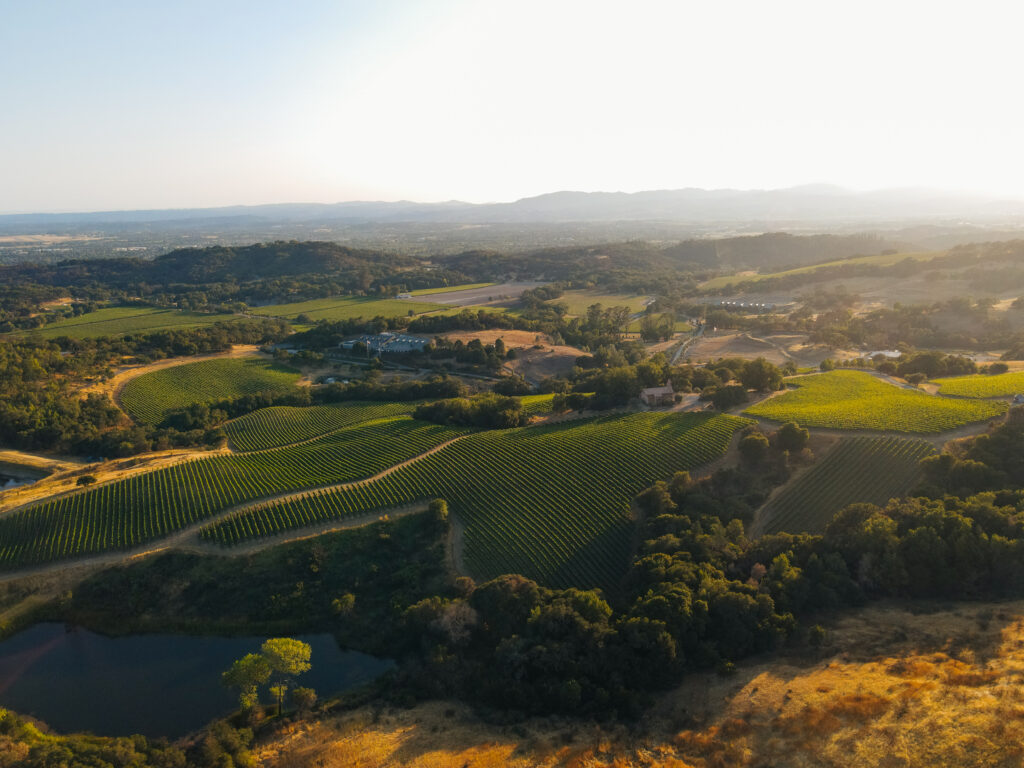
Chalk Hill Estate Vineyards & Winery
Founded by Fred Furth in 1972, this producer is the standard-bearer of Sonoma County’s Chalk Hill AVA—indeed inspiring its designation some 11 years later. The name alludes to the whitish hue of the volcanic ash that distinguishes the appellation’s soils of sandy silt loam, clay, and quartzite, a key feature of its terroir along with a climate that’s warmer than that of the rest of the Russian River Valley—attributes that together contribute to the wines’ signature combination of richness and elegance, ripeness and freshness.
Appreciating its unique place in the development of the region—and the sense of place its wines convey—Foley purchased the Chalk Hill estate in 2010 with a goal to increase its annual production to 60,000 cases. Since then, it has expanded its reach to the Sonoma Coast and become one of the top 20 ultra-premium California brands in the process (in fact, it outpaced the segment by 5% in 2024). With respect to specific SKUs, the numbers speak for themselves:
Sonoma Coast Chardonnay: Top-ten Chardonnay in the $15–$20 range (and the fastest-growing among its cohorts at 22%)
Estate Chardonnay: Top-15 Chardonnay priced $25 and up
Estate Sauvignon Blanc: Top-five California Sauvignon Blanc in the $20–$25 range and top-five revenue growth items for the category (growing 25%)
Sonoma Coast Pinot Noir: Top-15 California Pinot Noir
Ferrari-Carano Vineyards and Winery
As second-generation Italian Americans, Don and Rhonda Carano were entranced by the beauty of Sonoma County on a visit to California in 1979—after all, it reminded them of Tuscany. Two years later, they founded Ferrari-Carano in Dry Creek Valley, building an estate whose architecture and gardens likewise evoked a Tuscan villa while tending 30 acres of vineyard land; they released their first wines, a 1985 Chardonnay and a 1986 Fumé Blanc, in 1987.
Today, the “Cali-Italian” winery oversees 1,200 acres spread across Northern California, produces more than 20 SKUs, and represents the largest brand by volume for FFWS, which acquired it in 2020. The number-six ultra-premium California brand, it’s especially (but not strictly) known for its white wines:
Interestingly enough, Ferrari-Carano recently decided to double down on its production of the ever-popular Pinot Grigio while highlighting its roots by launching not another domestic version of the varietal wine but rather an expression from Italy’s Friuli Grave DOC. As FFWS CMO Jason Daniel puts it, “It made sense to expand with an Italian import [that] honors the founding family and is authentic to the brand.”
To promote the inaugural release—whose distribution off-premise is nationwide—FFWS began a collaboration with Italian chef, author, and social media sensation Nadia Caterina Munno, also known as The Pasta Queen, that has since grown to become a full-blown partnership. With more than a million followers on YouTube and more than 5 million on Instagram, Munno is now Ferrari-Carano’s spokesperson, and she just may have moved the needle on sales of the Ferrari-Carano Pinot Grigio: It’s currently the number-one new (<$1,000 YA) Pinot Grigio in the $15–$20 segment.
Chardonnay: Top-five Chardonnay in the $15–$20 range, growing 2% (4% faster than the segment)
Fumé Blanc: Top-five California Sauvignon Blanc in the $11–$15 range
California Pinot Grigio: Top-ten California Pinot Grigio and top-ten growth item in the $11–$15 range
Cabernet Sauvignon: Top-15 Cabernet Sauvignon in the $25–$35 range
Siena Red Blend: Top-ten red blend in the $20–$25 range
Chateau St. Jean
From the construction of the eponymous chateau as a private summer home in the 1920s to the founding of the brand in 1973 to the inaugural release of widely celebrated red blend Cinq Cépages in 1990, this magnificent Kenwood estate long stood among Sonoma County’s crown jewels, one that helped put the region on the wine world’s map. But in recent decades, says Nora Feeley, FFWS senior vice president, communications and events, it “lost its way, and the wines sold in the market were not reflective of the quality” of which it was capable.
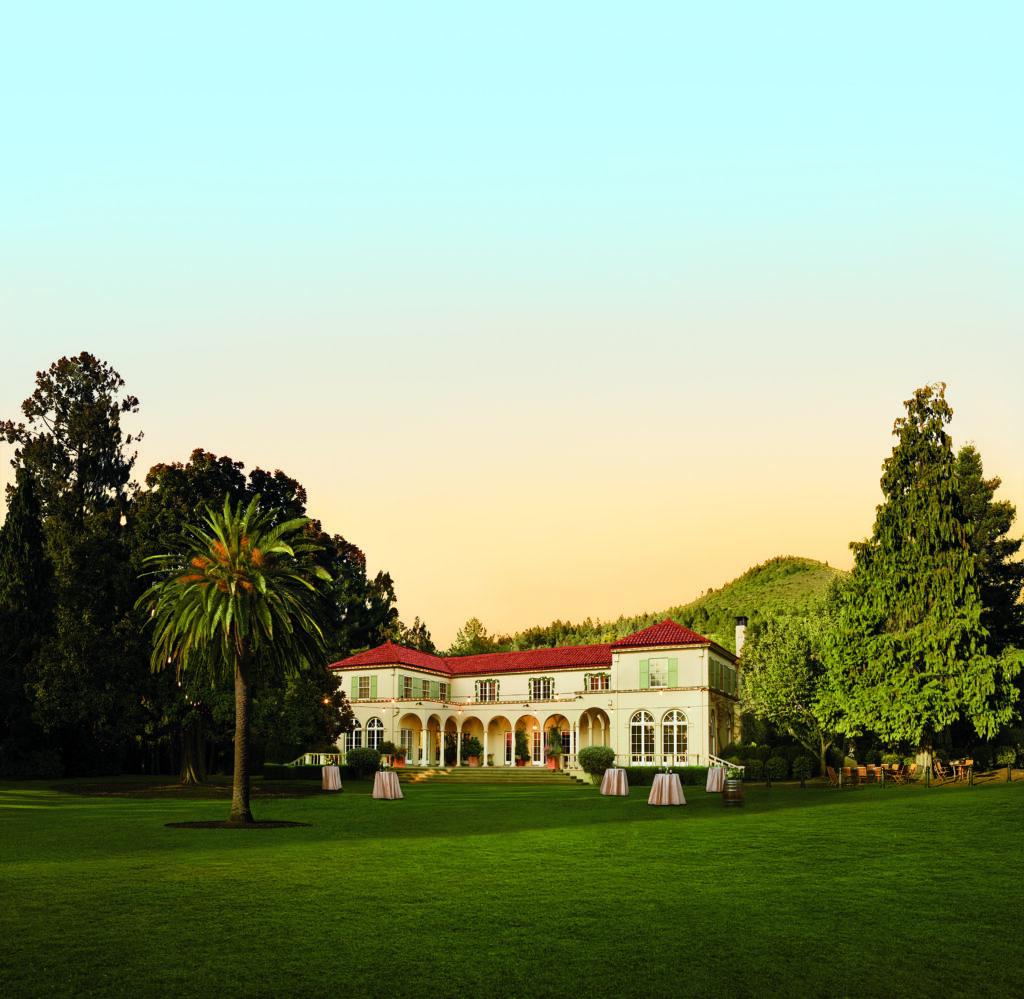
Enter FFWS. After purchasing Chateau St. Jean in 2021, the team went about renovating its winemaking facility—including rebuilding the destemmer, crush pad, and presses—in order to return production, which had been moved off-site, back onto the premises. Last year, they hired winemaker Lisa Evich, formerly of SIMI Winery, to oversee operations. And in addition to creating two new single-vineyard wines—a Carneros Chardonnay and a Knight’s Valley Cabernet Sauvignon, both available nationwide—they relaunched Cinq Cépages in February. The 2022 vintage exemplifies Chateau St. Jean’s revitalization insofar as the sourcing has been fine-tuned, as has the style of the wine—named, of course, for the five key Bordeaux varieties—and the packaging has been updated for a contemporary look. Distribution of the 1,000-case release is primarily limited to fine wine retailers and restaurant accounts.
Meanwhile, it’s evident that FFWS has helped turn things around for the 50-plus-year-old producer:
Chateau St. Jean: Top five for revenue growth among California wine brands priced $25 and above
Carneros Chardonnay: Number-one new (<$5,000) Chardonnay priced $25 and above
Knight’s Valley Cabernet Sauvignon: Top-five new Cabernet Sauvignon $25 and above
Silverado Vineyards
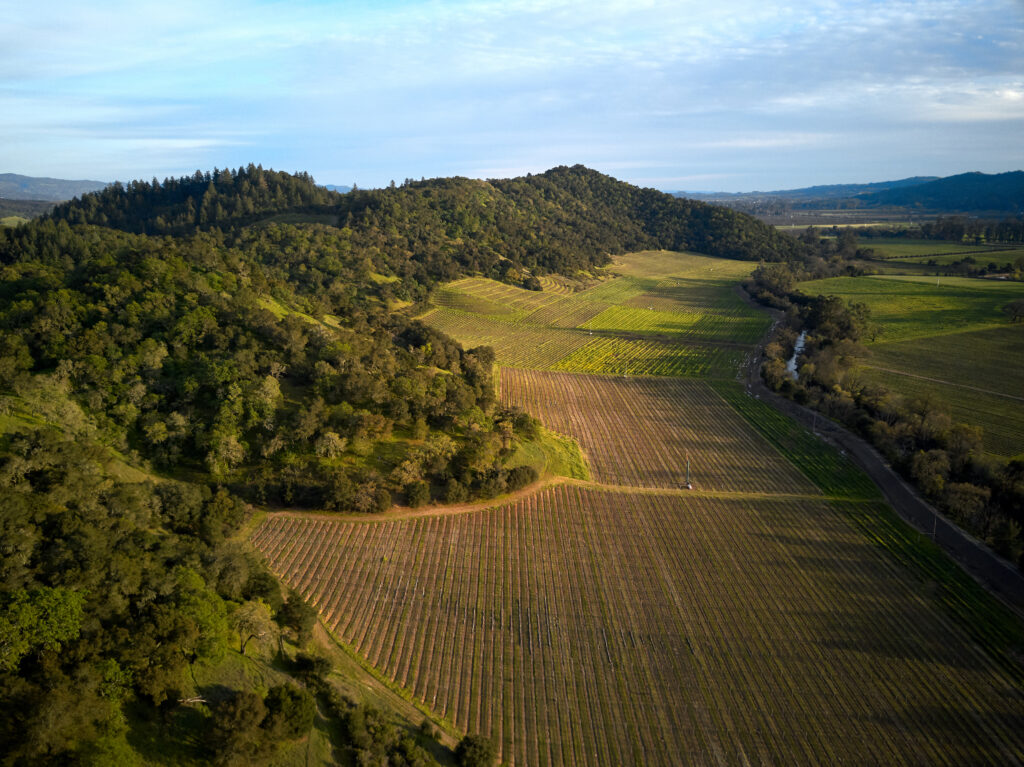
Walt Disney’s daughter and son-in-law, Diane Disney Miller and Ron Miller (along with Disney’s wife, Lillian Disney), founded Silverado Vineyards in 1981, building a winery above the eponymous vineyard that had been planted to vine since 1884—and to Cabernet Sauvignon specifically since the 1960s, making it one of the first sites in what would become Napa Valley’s Stags Leap District to harbor the grape. Today it’s known as the birthplace of the Disney-Silverado Heritage Clone, one of only three Cabernet clones to attain heritage status in California.
Of course, the winery itself is famed for the Cabernets it sources from its namesake as well as from estate properties in Coombsville and Yountville—particularly SOLO, a Stags Leap designate featuring Silverado Vineyard fruit; the Coombsville-appellated GEO, which hails from equally renowned vineyard Mt. George, also first planted in the late 1800s; and the Estate Cabernet, a blend of the two historic sites. But the portfolio as a whole is lauded as an estate-grown and -produced enterprise, from the Miller Ranch Sauvignon Blanc to the Borreo Ranch Kerner.
To burnish these bona fides, FFWS acquired Silverado Vineyards in 2022 and instantly got to work, appointing seasoned winemaker Alison Rodriguez (formerly of Beringer Vineyards and The Hess Collection, among others) to oversee production. The auspicious timing of her arrival happened to correspond with a period of notable growth for the winery: According to Impact Databank, its sales grew 34% to 52,000 cases between 2021 and 2022 and another 30% to almost 70,000 cases from 2022 to 2023. These figures earned it an Impact Hot Prospect award two years in a row.
That said, its production remains rather limited in keeping with its repute as a prestige brand—which makes the following numbers all the more impressive:
Silverado Vineyards: Top-20 super-luxury California brand and a top-ten brand in terms of growth (13%)
Estate Cabernet Sauvignon: Top-20 Cabernet Sauvignon priced $25 and above, growing 9% (9% faster than the segment as a whole)
Sauvignon Blanc: Number-two California Sauvignon Blanc priced $25 and above and the number-one revenue growth item in the segment (22%)
At a time when the story behind a product is believed to compel buyers nearly as much as its quality, FFWS’ efforts to both capture (or recapture) and communicate the glory of its illustrious properties are not going unnoticed by the trade. Take it from Mark Smith, director of adult beverage of East Coast supermarket chain Harris Teeter: “Recent acquisitions by Foley Family underscore its commitment to highlight and grow iconic brands in our industry,” he asserts. “These brands have rich histories that resonate with current and future generations of consumers.” Longevity breeds legends.
