
by Bob Paulinski, MW
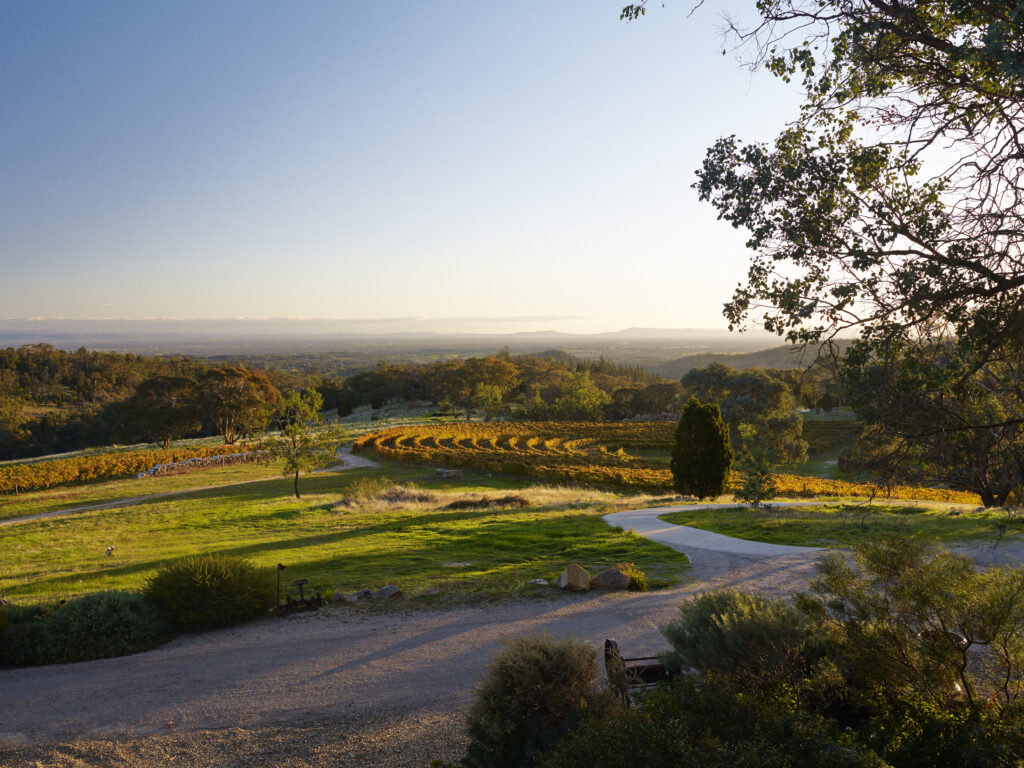
I’ve spent the better part of four decades traveling the wine world. One place stands apart as being the most compelling region I’ve ever visited in terms of diversity of grape varieties, production methods, and wine styles. That is Victoria, Australia, a place that I once called home. For anyone looking to delve into all of the fun, intriguing, and inviting aspects of wine, this is flat-out the best place to be in the world, as there is always something new and interesting to explore across its 20-plus designated regions—each distinctively different, each with a story to tell.
Located on the southeastern mainland, Victoria is the second smallest state in Australia. Its wine-producing history goes back to the gold rush of the 1850s, which saw an influx of people who brought with them both expertise and vine cuttings; by 1890, it was Australia’s leading producer by volume, accounting for half of the country’s total output. Since that time, many challenges have been met, including phylloxera; a temperance movement; evolving market conditions and consumer habits (consider, for instance, that until the 1960s, the vast majority of wine made in Australia was fortified); and climate change, to name a few. Along the way, Victoria’s winemakers have developed resiliency and ingenuity, adjusting, adapting, and improving to establish one of the world’s most innovative wine industries. Today the state comprises over 600 producers—more than any other in Australia—the vast majority of which are small scale and family operated.
A number of factors impact the varieties they grow and the styles they yield. Victoria features a broad range of soil types; many are among the most ancient in the world. Fertility tends to be low, which limits grape yields and improves quality. Altitude is another key consideration, ranging between 20 and more than 1,000 meters above sea level. But perhaps the most persuasive feature of the terroir is that of climate. Much of the state is impacted by the Southern Ocean, while inland regions are more influenced by elevation and mountain ranges; the result is a patchwork of cool areas and much warmer ones in the deepest reaches of the state.
The Port Philip Zone
The wine regions in this relatively cool, low-altitude zone lie in close proximity to the city of Melbourne, making for easy day trips. Mornington Peninsula and Yarra Valley garner much of the attention, but excellent wines are also made in Macedon, Sunbury, and Geelong (home to Wine by Farr). As a whole, these are ideal places for aromatic grapes as well as world-class Pinot Noir and Chardonnay.
Mornington Peninsula is one of the most cutting-edge locales for cool-climate viticulture and artisanal production—trends that began to take shape in the 1970s, though vines were planted here as early as the late 1800s. Located south of Melbourne, it experiences noticeable coastal influence; as a result, this is not a place to find wines of high extract and power but rather of finesse and refinement along with bright, lifted acidity. Its Pinot Noir is particularly noteworthy, with none better than that of Moorooduc Estate, which produces the benchmark of the region.
A relatively cool growing area with varied soil types, Yarra Valley is perhaps the most dynamic region in Victoria. Red wine production accounts for two-thirds of the volume; Cabernet Sauvignon and Shiraz shine, producing wines with depth, weight, concentration, fine balance, and nuance. Pinot Noir also plays a prominent role here, and Chardonnay has become a modern-day success story. The former shows fine perfume, elevated red fruit, savory spice, and refined texture; the latter can perform at a world-class level, notable for its restraint, elegance, stone fruit notes, and judicious oak influence.
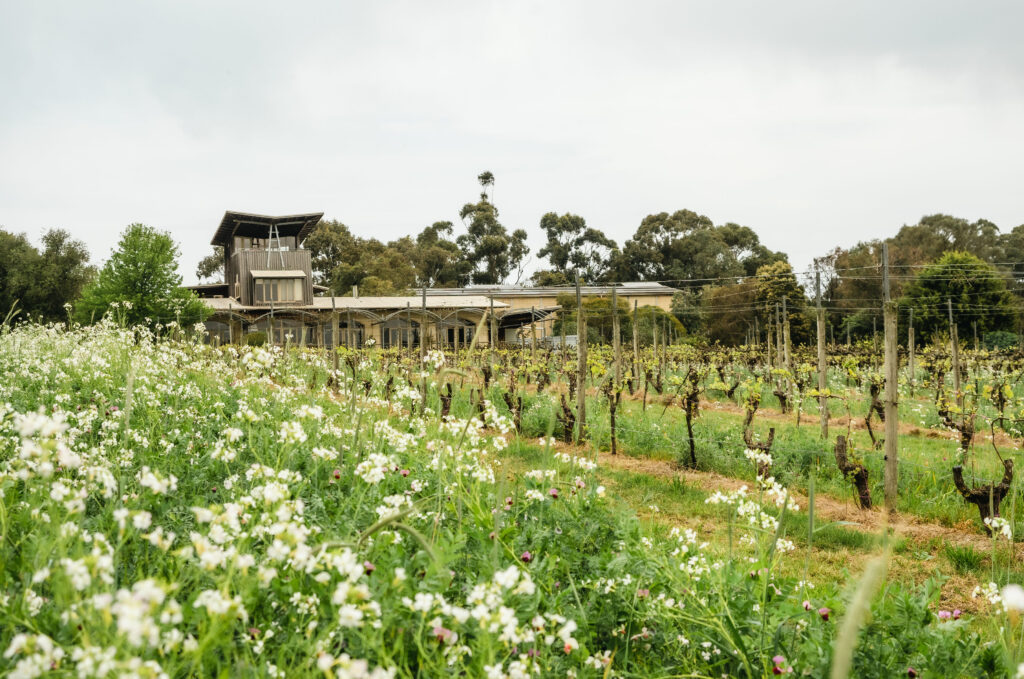
As part of an exciting broader trend, alternative varieties are becoming increasingly relevant in the Yarra Valley. Aligoté, Gamay, Grenache, Grüner Veltliner, Mencía, and Nebbiolo have all been added to the local landscape with great anticipation for their barely tapped potential.
Yarra Yering is an iconic Yarra Valley producer. Its No. 1 Dry Red is predominantly Cabernet Sauvignon with touches of other Bordeaux varieties, while the No. 2 Dry Red is mostly Shiraz with a small amount of Viognier in the tradition of the Northern Rhône; more recent bottlings also include a bit of Mataro, which lifts the aromatics and lends complexity. The No. 3 Dry Red, meanwhile, is made from traditional Portuguese varieties, with Touriga Nacional in the lead role. Explains winemaker Sarah Crowe, “With climate change, Portuguese grape varieties will likely become more prominent. The vineyard for the No. 3 Dry Red was planted in 1990; in retrospect, it was forward-thinking.”
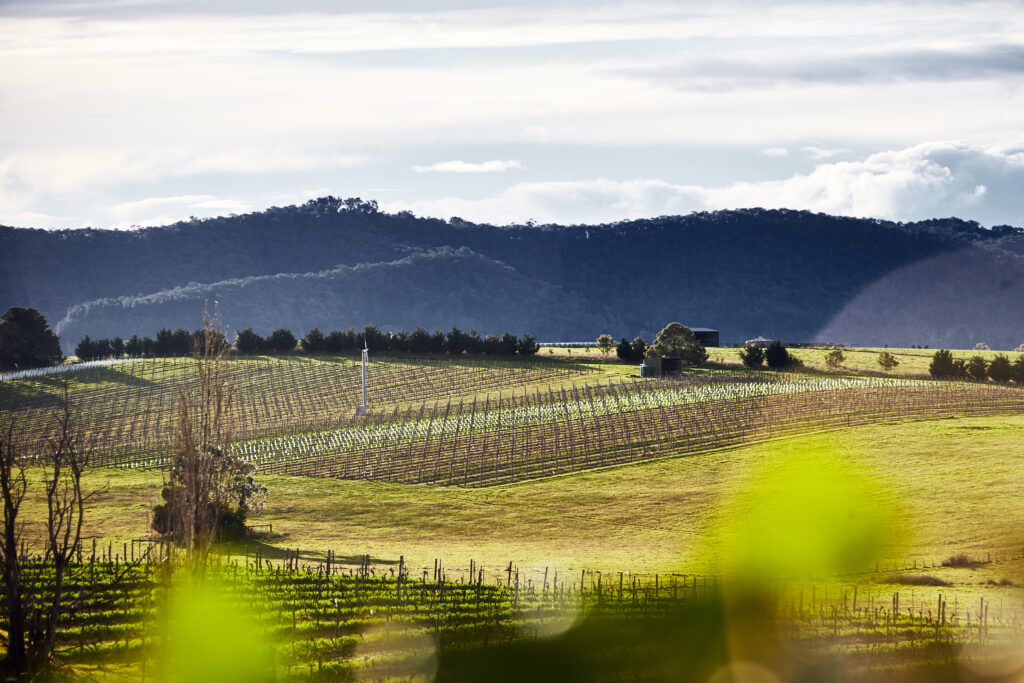
Mount Mary Vineyard has gained much deserved attention for Pinot Noir, but its reputation has been based on Cabernet Sauvignon since its founding over 50 years ago. Quintet is the star of the portfolio, made from traditional Bordeaux varieties: Subtle, refined, and impeccably balanced, it can easily age for a decade or more. According to CEO David Middleton, “The Cabernet family, in particular, is very well suited here. . . . We take great care to make elegant wines that faithfully express the qualities of this beautiful location.”
The Central Victoria Zone
Central Victoria covers a vast expanse north of the Great Dividing Range. It includes Bendigo, Heathcote, Goulburn Valley, Nagambie, the Strathbogie Ranges, and Upper Goulburn. Marked by less direct ocean influence, the climate here is generally warmer, albeit with a wide diurnal swing. This plays a critical role in extending the growing season, allowing for full phenolic ripeness. Cabernet Sauvignon and Rhône varieties including Shiraz, Marsanne, and Viognier grow well here; in recent years, Tempranillo, Sangiovese, and Nebbiolo, among other grapes, have also become increasingly relevant.
Visiting Tahbilk Estate in Nagambie Lakes in the Goulburn Valley is like stepping back in time. Founded in 1860, it’s among the oldest family-run wineries in Victoria, with some vines from the 19th century still in existence. Rhône varieties take center stage: The estate’s Marsanne is the finest produced in Australia, and aged versions of the grape—of which Tahblik has the world’s largest single holding—can be sublime.
At the opposite end of the spectrum is Chalmers Heathcote Vineyard, a relative newcomer that encompasses all that I love about Victoria wines. The focus here is on traditional Italian grapes—outstanding options in the face of climate change—sometimes made in unexpected styles. Take Felicitas, whose name derives from the Roman goddess of fertility, good luck, and happiness: Aged more than three years on the lees, the traditional-method sparkling wine is made entirely from Fiano, a variety with enormous potential as it thrives in a warm climate without losing acidity. Vibrant, fresh, and bright, it’s completely captivating from start to finish.
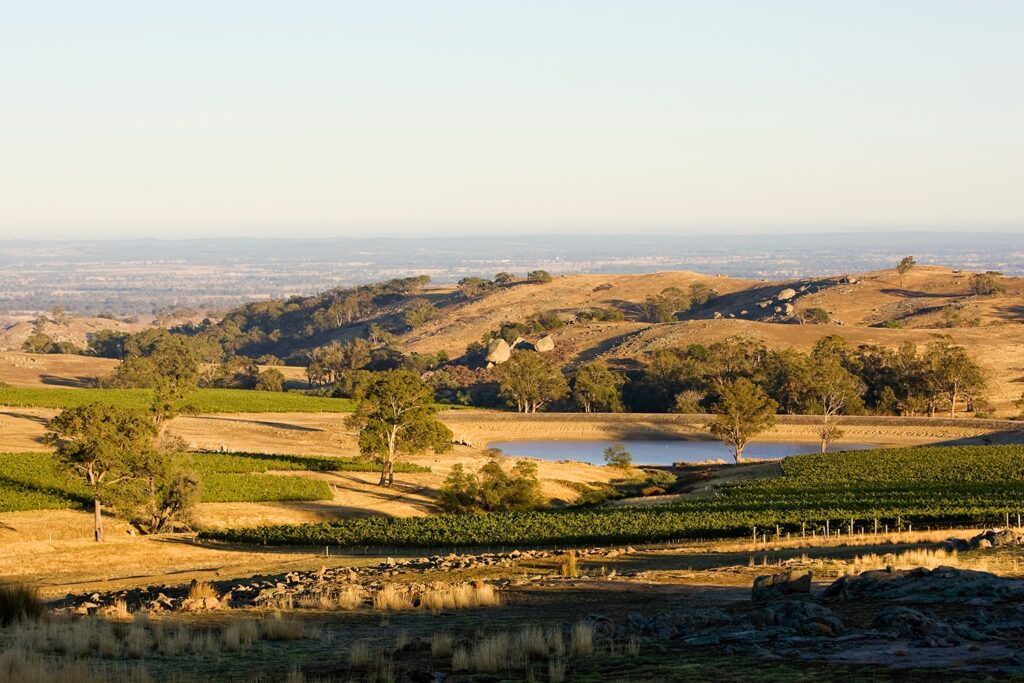
Fowles Wine has quickly become one of my favorite producers for expressive, individualistic wines that are not only fun but superbly made, mainly from Strathbogie fruit. Standouts include its Chardonnay and Shiraz, both possessing a striking, pristine character. As owner Matt
Fowles states, “The wines represent a combination of artisan winemaking coupled with an environment that spurs innovation.“
The Gippsland and Western Victoria Zones
Gippsland is a massive area with 400 kilometers of cool-climate coastal terroir, where vineyards are sparsely planted on soils that vary greatly. At this early stage of development, it’s difficult to make a clear assessment of its style other than saying that small, family-owned wineries dot the region to focus primarily on Chardonnay and Pinot Noir, with outstanding examples being made by Bass Phillip as a prominent player in the area.
Western Victoria encompasses Grampians, Henty, and Pyrenees. It’s a relatively cool-climate zone with a continental influence, ensuring a vast temperature swing from day to night. This extends the growing season while preserving acidity for fresher, brighter styles of wine. The range of varieties planted here is broad, with Shiraz and Cabernet Sauvignon playing prominent roles, joined by Pinot Noir in cooler pockets and a bit of Dolcetto and Pinot Meunier.
Grampians is a massively undervalued region producing stellar Shiraz. Mount Langi Ghiran, which was established more than 50 years ago, makes highly acclaimed examples—wines of substance that are well structured but round and full, with a bright, forward character and finely integrated tannins. For a complete contrast, look to Best’s Wines Great Western Riesling, Great Western being a subregion of Grampians: It’s bright, lively, and vibrant with citrus zest.
Pyrenees is another historic region that sits at the southwest end of the Great Dividing Range, where it yields stellar Cabernet Sauvignon and Shiraz. Blue Pyrenees Estate, which was originally established as a brandy house, now produces some dazzling reds, including the Richardson Reserve Cabernet Sauvignon. Says general manager Duncan MacDonald, “With the Pyrenees wine region being higher altitude, its cooler climate is ideally suited for Cabernet Sauvignon of immense concentration, structure, and intensity yet with elegance and finesse.”
The North East Victoria Zone
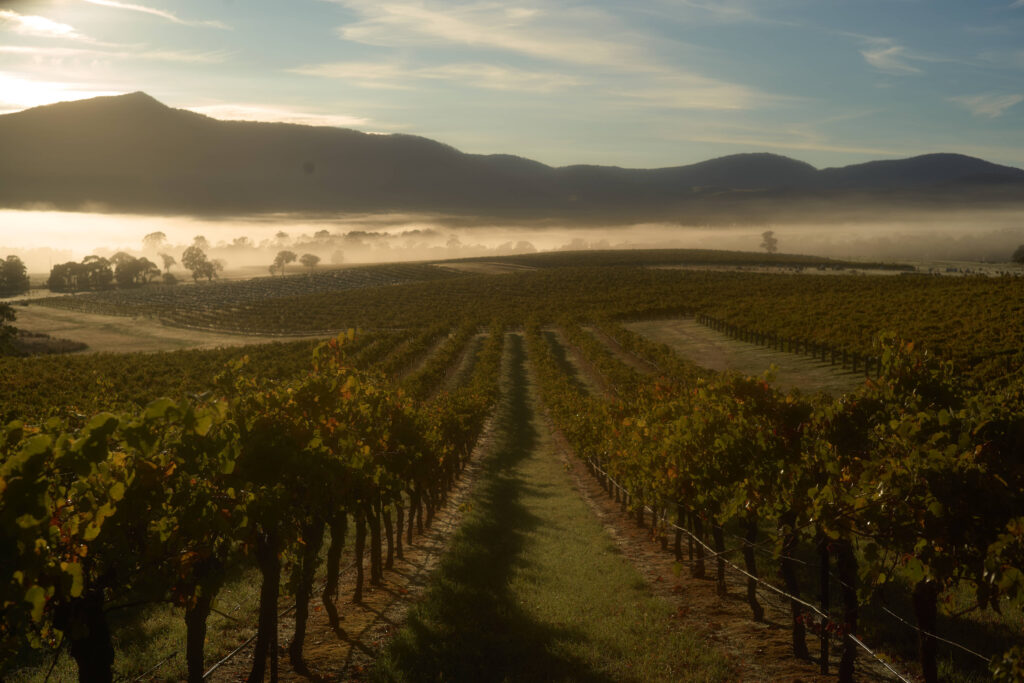
The regions in this zone, including Alpine Valley, Beechworth, Glenrowan, King Valley, and Rutherglen, represent a mishmash of styles. While each has its own merits, Beechworth and Rutherglen are the standouts, especially in terms of historical significance.
Giaconda Vineyard & Winery is one of the top producers in Beechworth, overseeing a vineyard planted at well over 1,000 feet in elevation. The portfolio is incredible from start to finish, with Chardonnay being the focal point. Explains winemaker Rick Kinzbrunner, “I don’t bow to trends or fashion. The Chardonnay uses natural yeasts and malolactic fermentation; it’s aged on the lees and not filtered. The resulting wines are concentrated, long, and powerful, with a precise, refined mineral component.” He also makes Nebbiolo, which he calls “a work in progress, but it’s made through very traditional methods.” Having tasted his version while living in Melbourne, I can say that it holds its own against many of the top wines of Piedmont.
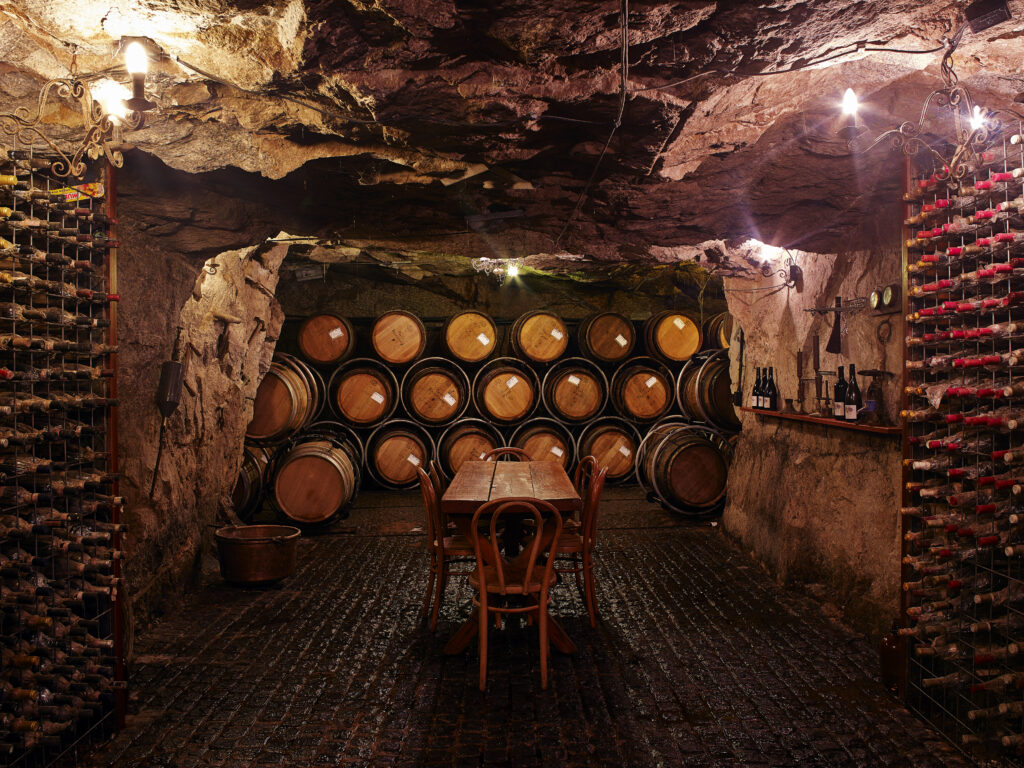
Rutherglen is one of Victoria’s most famous regions. There, 18 wineries produce its classic fortified wines, each bottle like a piece of Australian history. House styles vary to a degree, but all show tremendous depth, weight, and complexity and are worthy of the revival they’ve begun to enjoy in recent years. Chambers Rosewood Vineyards is a benchmark source, with vines dating back to 1901. Muscat and Muscadelle (Topaque) play a key role in its wines, which are blended from a range of vintages and aged in cask for extended years; the results are the antithesis of most modern-day wines, built on secondary and tertiary characteristics. Notes proprietor Stephen Chambers, “The mantra is generally to drink wines within two days of opening a bottle; this is the exception, as an open bottle of our fortified wine will drink well for months.”
The North West Victoria Zone
This zone is home to the Victorian side of the Murray Darling and Swan Hill regions, with the former producing the larger volume by far; as the historic workhorse of Victoria, it was instrumental in building Australia’s export market a few decades ago. The climate here is hot and dry with extended sunshine hours. Core varieties include Cabernet Sauvignon, Merlot, Sauvignon Blanc, and Shiraz, but alternative grapes are quickly gaining traction, as are smaller, artisanal wineries.
Victoria is brilliantly positioned for the future. Unconstrained by the regulations of many regions, its creative producers make wines that possess clear definition, purity, and a sense of place. Simply put, if you’re not seeking them out, you’re missing out on some of the most exciting wines in the world.
Tasting Notes
Chalmers 2019 Felicitas Sparkling, Heathcote, Australia ($42) A crazy fun bottle! Made entirely from handpicked Fiano by the traditional method, it sees more than three years on the lees and zero dosage. Pale in color, it sports a fine bead and a nice mousse; aromas of roasted nuts, a bit of bread dough, and citrus rind; and a good presence on the palate, marked by a gentle fizz and bright acidity to keep it lifted and fresh. A dry, refreshing, and unexpected yet highly satisfying sparkler. 92
Blue Pyrenees 2019 Richardson Reserve Cabernet Sauvignon, Pyrenees, Victoria, Australia ($120) Deep, dense core. Well-extracted, pronounced black fruit meets smoke and spice. On the palate, the wine is full-bodied and robust with excellent volume, yet it’s also nuanced and well balanced, offering ripe tannins and superb length. Only produced in top vintages, it shows great potential for aging over the next eight to ten years. 92
Fowles 2020 Ladies Who Shoot Their Lunch Shiraz, Victoria, Australia ($35) Deep, dense red color with a nearly opaque core; elevated aromas include savory dark red fruit and spicy cracked pepper. The palate is full-bodied, well structured, layered, nuanced, and long, developing tremendously with aeration. Cellar over the next five years. 95
Best’s 2022 Great Western Riesling, Great Western, Victoria, Australia ($24) Pale, youthful appearance. Bright, exuberant, lifted aromatics lead to beautiful primary fruit notes of citrus rind and green apple. Vibrant acidity makes for a mouthwatering wine of excellent purity, with exceptionally good length and minimal residual sugar. 92
