

by Jonathan Cristaldi
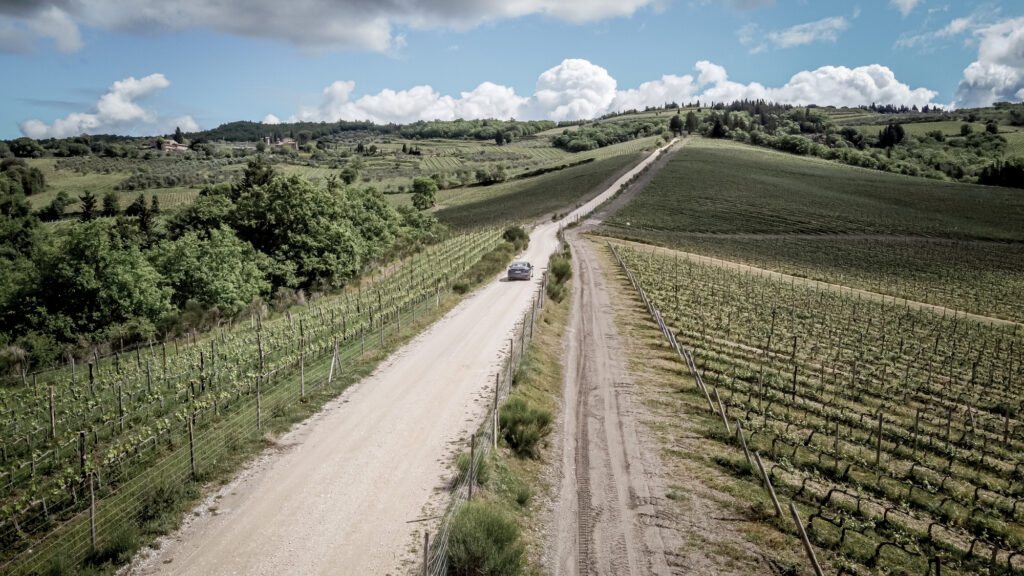
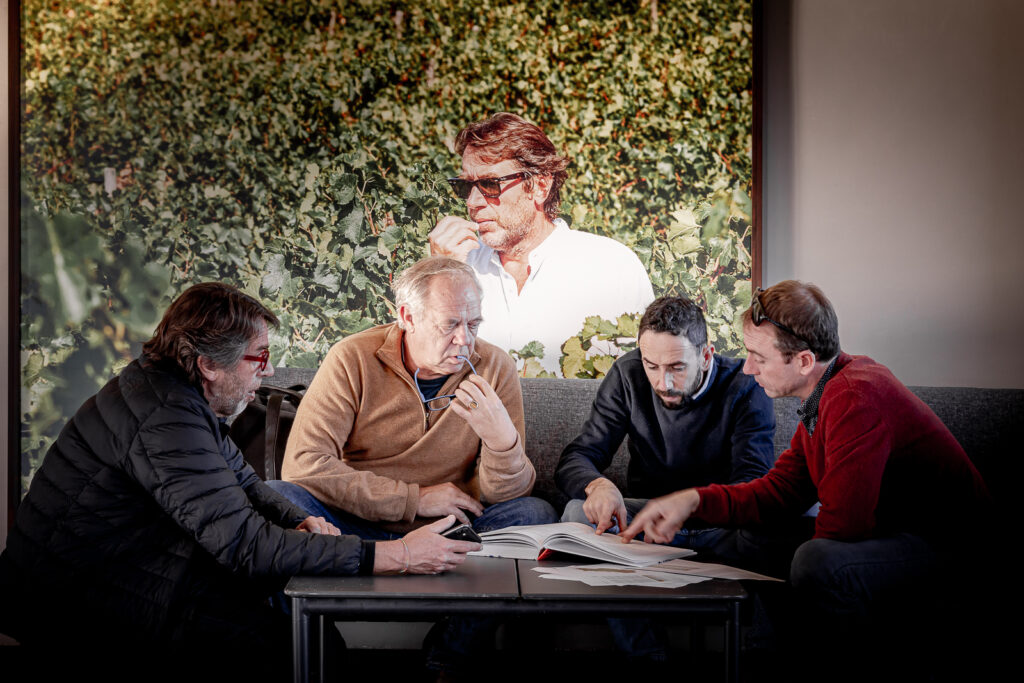
In April, I met with Naples-born Giampaolo Motta and his team at Tenuta La Massa, the estate he owns in Italy’s Chianti Classico zone. On an unusually cold and rainy day, vineyard and cellar manager Francesco Mazzi shivered a bit as he described the vineyards to me, which we could see from the winery’s tasting pavilion. Mazzi, who joined La Massa in 2004 and works closely with famed consulting winemakers Stéphane Derenoncourt and Julien Lavenu, mused that “we were given a challenging objective” when Motta decided to grow Bordeaux varieties in the heart of Sangiovese country. As it happens, though, the terroir is quite well suited to Cabernet Sauvignon, Merlot, and Petit Verdot.
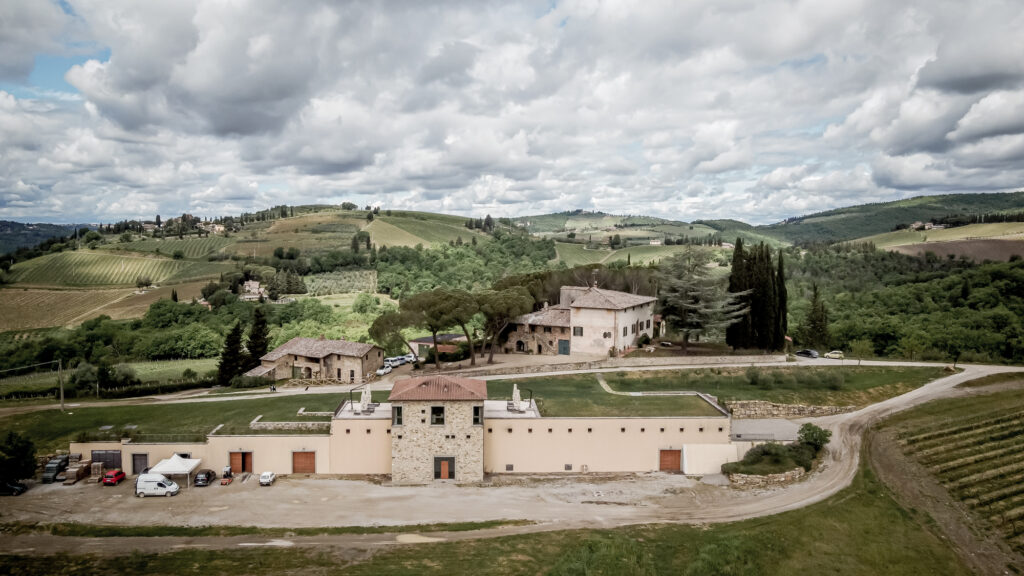
La Massa sits on 123 acres of steep hills and patchworks of forest land at 1,180 feet in elevation near the hilltop village of Panzano in the Conca d’Oro, equidistant between the cities of Florence and Siena. Vineyards totaling 49 acres, mostly spread across a vast hillside divided by a narrow road, are rooted in a mix of ancient seabed–derived scaly clay and Galestro soils of loose marl and limestone. “We are in the western and southern part of the hill, and our vineyard mostly faces south and southwest,” explained Mazzi as he pointed out the various blocks. “As we are in the middle part of the hill, our vines are very well exposed with good ventilation in the afternoon, which helps us against disease pressures and protects us against the frost and humidity that can create problems during some weeks in June and September.”
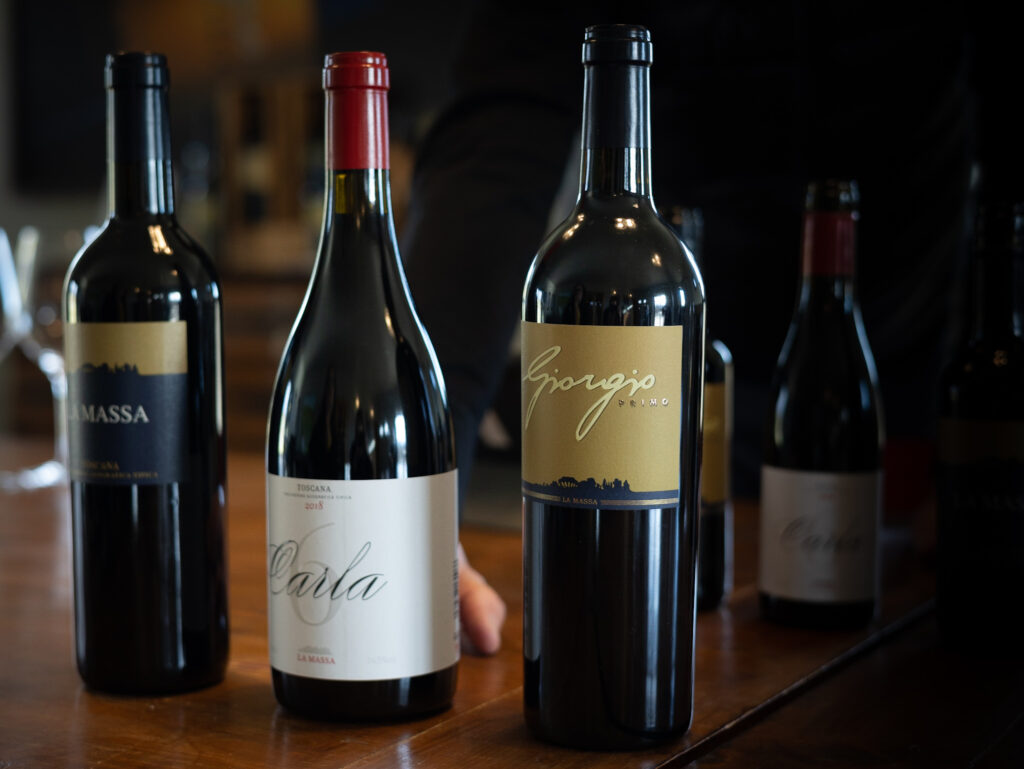
Mazzi noted that some grapes are sourced from other vineyards in Chianti Classico and nearby San Martino to the north for the entry-level wine, simply called La Massa—an IGT Toscana blend of about 50% Sangiovese, 30% Cabernet Sauvignon, and 20% Merlot with trace amounts of Alicante Bouschet and Petit Verdot. La Massa also makes two 100% estate-grown wines. Carla 6, named after Motta’s daughter, is 100% Sangiovese from vines growing exclusively in the estate’s Block 6, which was planted in 1999 on southwest-facing slopes of gray shale and sand. And the flagship wine is Giorgio Primo, which Motta likens to a French “Grand Vin” as a blend of Cabernet Sauvignon, Merlot, and Petit Verdot sourced from the estate’s best midslope parcels. With the 2020 release, Giorgio Primo is now represented by Barre & Touton on La Place, the Bordeaux-based collective of courtiers and négociants that serves as a marketplace for global buyers of extremely fine wine. (In the U.S., La Massa is available through several importers.)
Motta didn’t always foresee a career in wine. His family ran a leather-making operation in Naples that he planned to join, so he studied chemical engineering in France. While at school, he fell in love with a French enologist and spent weekends with her in Bordeaux, where his taste for the region’s wine eventually eclipsed his love of the enologist. After graduation, he worked in the family business for six years, but the world of wine kept calling to him. “I moved to Chianti and began working for wineries in the region and kept my eyes open for a small property,” he explained. As luck would have it, La Massa came up for sale, and the neighboring estate—Castello dei Rampolla, where Motta had been working—chose not to purchase it, though it was offered to them. Motta’s family helped him guarantee a loan from a bank, and in 1992, at age 31, he bought it. “It was a coup d’état,” he mused with hearty laughter.
Naturally, he began producing Chianti Classico. But little by little, he told me, “I felt caged in by the rules of the Chianti consortium”—and his passion for French wine remained strong. So Motta resolved to break with convention. In 1996, he began grafting Sangiovese over to Merlot and then grafted Cabernet Sauvignon vines in 1998. He engaged in detailed research of La Massa’s soil and weather patterns, which led him to conclude he had the terroir to grow world-class Bordeaux varieties, even though doing so would require an IGT Toscana rather than a Chianti Classico designation. By 2003, his replantings were extensive, with Cabernet Sauvignon, Merlot, and Petit Verdot taking root in the thick of Sangiovese territory.
Today, La Massa oversees 24 acres of Cabernet Sauvignon compared to 14 acres of Sangiovese as well as a 12-acre mix of Merlot, Petit Verdot, and Alicante Bouschet. Motta is quite content to be the outspoken renegade of the Chianti region. Upon exiting the consortium in 2002, “we made a little design on the back label,” he said, then handed me a bottle. You have to look closely to see the illustration on the label of the famous Gallo Nero (Black Rooster), a symbol of Chianti Classico, tied and spit-roasted over an open flame. I gasped, then chuckled. Talk about a sense of humor. “Sangiovese is always in our hearts,” Motta offered with a grin, “but Merlot and Cabernet have the most space for me.”
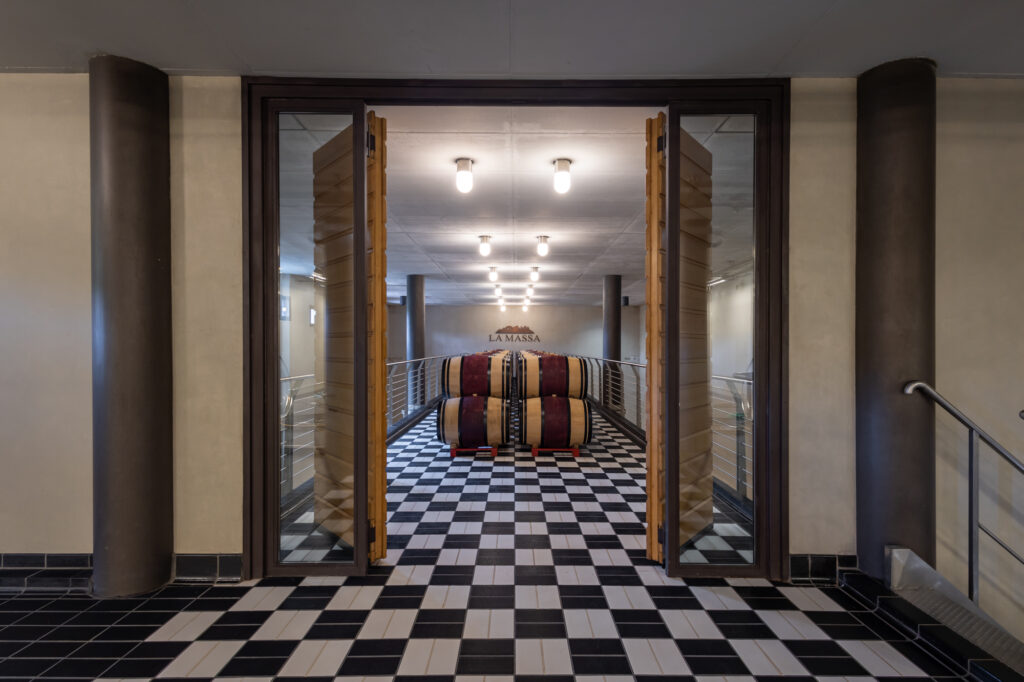
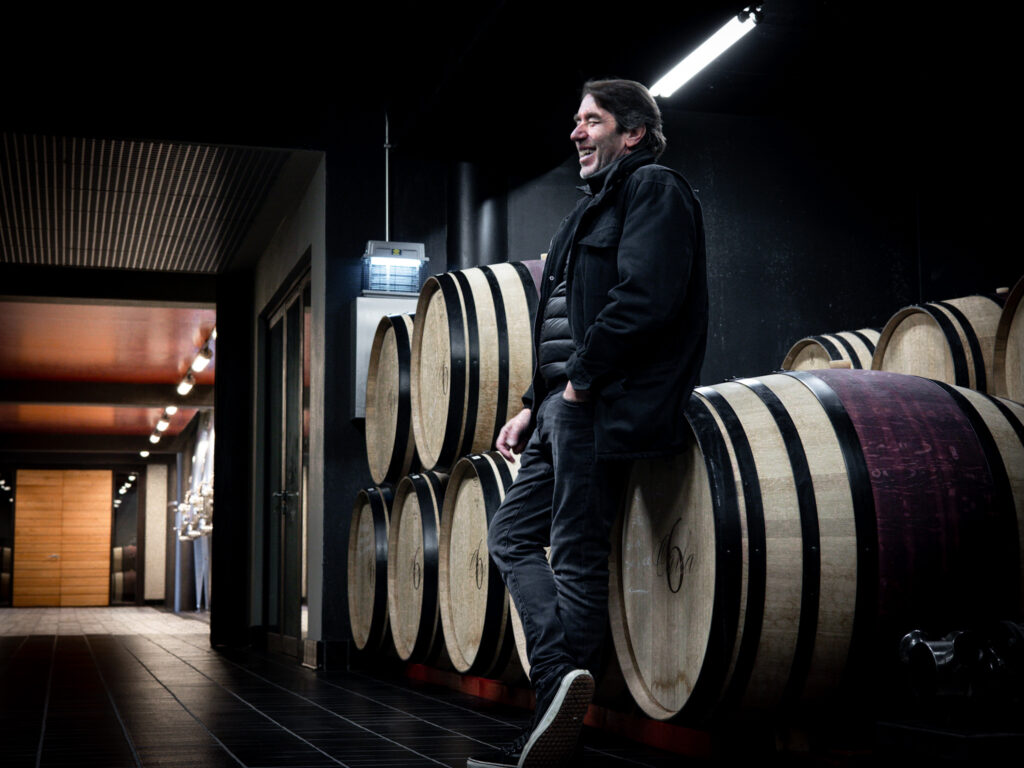
A Ferrari fanatic, Motta has fashioned his gravity-fed cellar accordingly: The ceiling is the same shade of red as the 1990 Ferrari, the floors are checkered black and white like a racing flag, and 12 stainless-steel tanks in two rows of six represent the pistons of a V12 engine. Everything is spotless, like a Ferrari rolling off the production line. The wines generally spend 20–28 days in tank for fermentation and maceration; the blend for La Massa ages for roughly 14 months in oak, while Carla 6 and Georgio Primo rest up to 20 months. “There are no specific rules; we are flexible depending on the vintage,” Motta said, nicely summing up his attitude on all things in life and winemaking.
Tasting Notes
Tenuta La Massa 2021 Carla 6 IGT Toscana, Italy ($120) Dark and perfumed with dried cherry, dried flowers, rich brown baking spices, toffee, and a hint of caramel. Medium- to full-bodied with a lot of power, tension, and grip. Intensely ripe blackberry and black cherry meet graphite minerality and assertive tannins that have a granular quality. The finish is long and mineral-rich, and the wine is quite refreshing for all its weight and power. 96
Tenuta La Massa 2020 IGT Toscana, Italy ($60) This dark, powerful wine shows robust tannins, fleshy black cherry and blackberry, and blue fruit aromatics complemented by perfumed floral notes, black licorice, wild herbs, and dark chocolate. Full-bodied, juicy, and long, it’s super delicious now, with the structure to cellar. Roughly 50% Sangiovese, 30% Cabernet Sauvignon, and 20% Merlot with less than 1% Alicante Bouschet and Petit Verdot. 95
Tenuta La Massa 2020 Giorgio Primo IGT Toscana, Italy ($150) This difficult vintage saw rain late in the harvest, and the Merlot suffered. Lovely nose of dark berries, graphite, sandalwood, and black truffle. Wonderfully rich and full-bodied with loads of ripe black and red currant, black licorice, and wild herbs plus a firm spine of refreshing acidity. Tremendous mineral tension adds to the power and length of this blend of 75% Cabernet Sauvignon, 15% Merlot, and 10% Petit Verdot aged 20 months in (50% new) oak. 98
Tenuta La Massa 2019 Giorgio Primo IGT Toscana, Italy ($155) A warmer vintage led to an oversized crop. Showing excellent length, this blend of 55% Cabernet Sauvignon, 40% Merlot, and 5% Petit Verdot is incredibly savory, with black licorice, black truffle, and superfine tannins that build on the finish. Rich, succulent boysenberry is nuanced by heady garrigue notes. 97
Tenuta La Massa 2011 Giorgio Primo IGT Toscana, Italy ($195) Red currant, bacon fat, leather, earth, and black truffle. Full-bodied and richly layered, with a firm backbone of racy acidity. Velvety tannins are perfectly integrated. 95
Tenuta La Massa 2003 Giorgio Primo IGT Toscana, Italy ($235) Still holding on with fantastic freshness and verve. Red currant, turned earth, licorice, and graphite mingle with garrigue. Full-bodied with intense, grippy tannins and a core of black currant; crushed slate, black olive, and truffle all build richness and length through the rustic finish. 95
Tenuta La Massa 2001 Giorgio Primo IGT Toscana, Italy ($245) In beautiful condition, this wine represents a vintage in which a hot summer cooled near the end of harvest. It is beautifully precise, offering black cherry and blackberry nuanced by shaved black truffle on the nose. With satiny, polished tannins, the delicious, full-bodied expression is rich, long, layered, and full of life, with power, energy, drive, and generosity. A lingering finish of currant, tobacco, and white truffle is tantalizing. 97
