
In the world of wine, some stories are passed down through generations, while others are entirely original. 1000 Stories, a subsidiary of Bonterra Organic Estates, has managed to tell a tale of both heritage and novelty, pioneering a revolutionary wine category while simultaneously working to rewild one of America’s most iconic species, the bison.
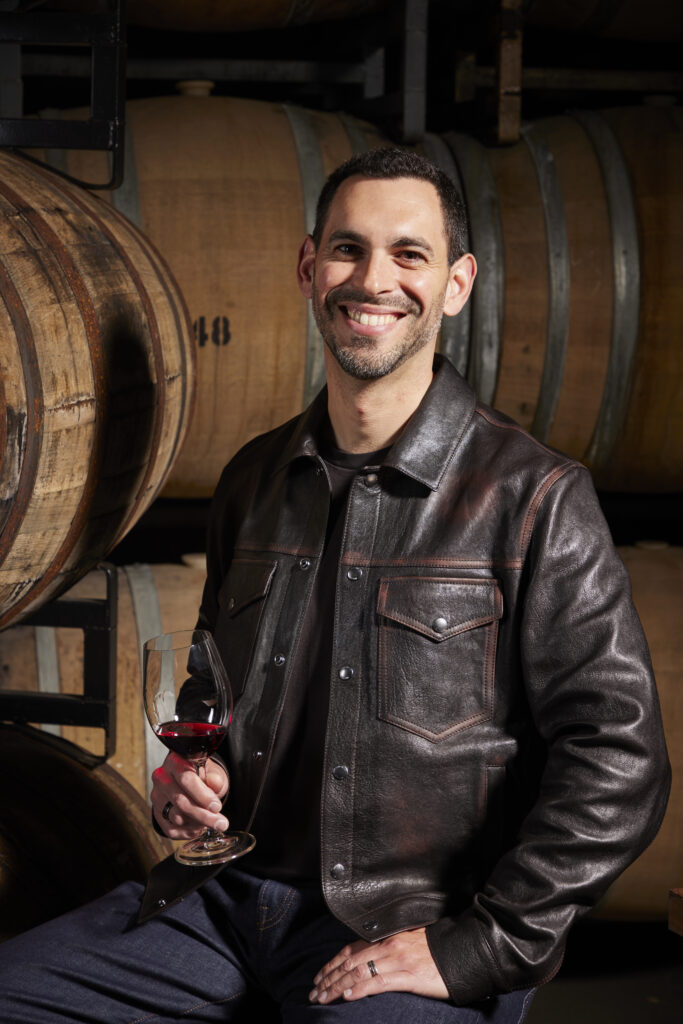
When founding winemaker Bob Blue released the first-ever bourbon barrel–aged wine—a bold Zinfandel—in 2014, he didn’t just create a new subcategory; he authored the first chapter in the story of one of California’s most creative wine brands. Today, in the seasoned hands of winemaker Sebastian Donoso, 1000 Stories continues to push the boundaries.
“What drew me to 1000 Stories was the brand’s innovative spirit, combined with its commitment to being a force for good,” says Donoso. “I love seeing how it pushes itself to challenge traditional thinking.”
While the brand’s portfolio also includes traditionally crafted wines, its flagship Bourbon Barrel-Aged Zinfandel, now distributed in 18 countries, is the leading spirits barrel–aged Zinfandel with a 42% market share (per a Circana report covering the 52 weeks ending November 3, 2024). Putting a fresh spin on the circular economy, 1000 Stories repurposes charred American oak barrels that,
by law, can only be used once in bourbon production.
These barrels lend the wines a distinctive smokiness along with notes of dried herbs, fragrant vanilla, and rich toffee—imparting a uniquely American character to Zinfandel as California’s heritage grape as well as to a Cabernet Sauvignon and a red blend composed of Teroldego, Zinfandel, Cabernet, Petite Sirah, and Pinot Noir. These bold reds are sourced primarily from Lodi’s heritage vineyards, whereas the brand’s traditionally styled whites—including a Chardonnay and a Sauvignon Blanc—and its Pinot Noir benefit from the cooler Monterey region’s coastal influence.
A Powerful Partnership
Perhaps the most compelling chapter in the 1000 Stories narrative is being written far from the groomed vineyards of California in the rugged landscape of Yellowstone National Park. In a powerful collaboration with Yellowstone Forever, the park’s official nonprofit partner, 1000 Stories is helping support a new future for American bison.
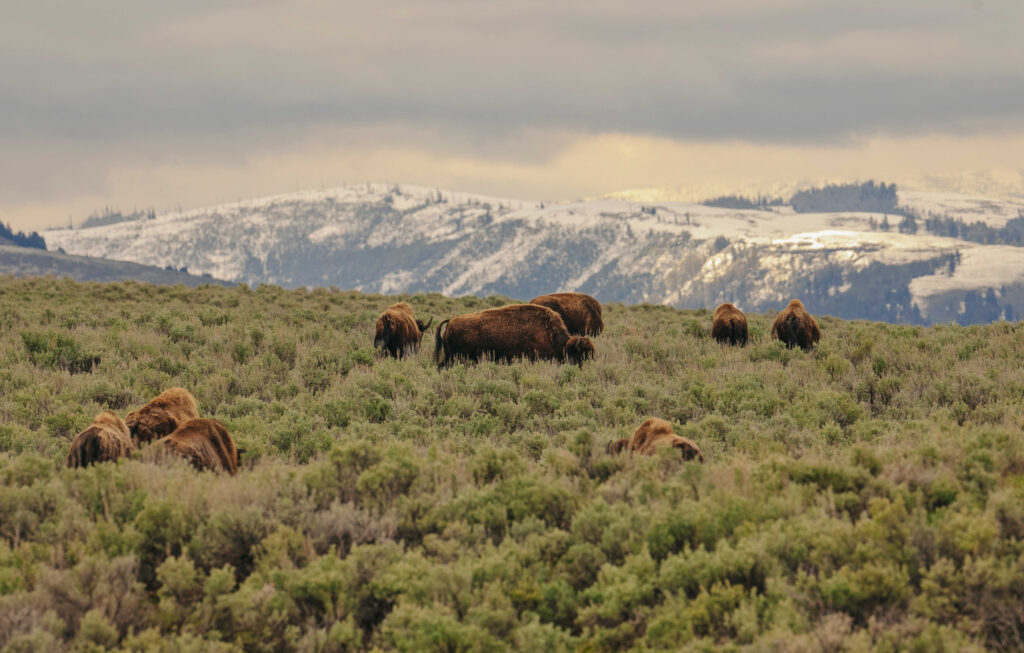
The species’ story is one of tragedy and hope. In the 1800s, tens of millions of bison roamed freely across North America, from Canada through the United States and into northern Mexico. However, westward expansion brought devastating changes: As railroads stretched across the continent and European settlers transformed prairies into farmland, bison were systematically slaughtered—up to 5,000 per day during the late 1800s. This slaughter had a devastating impact on Native Americans, for whom the animal was both sacred and central to their way of life, as they relied on it for food and shelter. By the early 1900s, a mere 23 bison remained, finding refuge in Yellowstone National Park.
Today, thanks to conservation efforts, Yellowstone is home to a thriving population of 5,000–6,000 bison; by focusing on this keystone species, 1000 Stories is contributing to the preservation of the park’s unique ecosystem. 1000 Stories is also a proud supporter of the Bison Conservation and Transfer Program, a relocation initiative that helps restore biodiversity to the landscape and has successfully relocated over 400 bison to 26 Native American tribes across 12 states since 2019.
Yellowstone is one of the only places in North America where hundreds of native species, including bison and wolves, still coexist in their natural habitat. 1000 Stories’ commitment to the Bison Conservation and Transfer Program is a testament to its dedication to ecological and cultural conservation. In addition to supporting Yellowstone Forever, 1000 Stories is committed to sustainable business practices, as reflected by its parent company: Bonterra Organic Estates is one of the world’s first B Corp–certified wine companies and the first to achieve Zero Waste certification, diverting 98.31% of waste from landfills and powering its winery operations with 100% renewable energy. Such efforts have placed it in the top 5% of global B Corps for environmental impact.
Charging Into
the Storm
In a market trending toward low- and even no-alcohol wines, 1000 Stories takes inspiration from the bison it protects. While cattle scatter before an approaching storm, bison charge directly into it. Embracing this bold spirit, 1000 Stories is forging ahead with a high-alcohol Cabernet Sauvignon that pushes the boundaries of traditional winemaking.
“Our high-alcohol Cabernet Sauvignon is created using the ‘sweet-spotting’ winemaking method of adjusting alcohol levels to maximize flavor,” explains Donoso. At 16.5% ABV, this new release is aimed at consumers seeking robust expressions of California Cabernet Sauvignon. The winemaking process involves harvesting grapes at peak sugar levels and carefully managing fermentation to achieve the desired alcohol content while maintaining balance and complexity. The result is a rich red with flavors of strawberry compote, mocha, vanilla bean, and toffee.
Like the charging bison adorning its label, this latest offering reflects the adventurous, roaming spirit that has guided 1000 Stories since the beginning. “We aspire to create new product offerings that are bold and innovative and of course go against the grain,” says Tiffany Tran, director of marketing for 1000 Stories. This philosophy extends beyond the brand’s wine portfolio to encompass its entire approach to business and conservation. Guided by their motto “Never Run Out of Stories,” the team behind 1000 Stories understands that wine, like storytelling itself, has always been a force that brings people together.
